The On Call Steward: a 24/7 Resource for our Pilots

Fellow Pilots,

As of April 1, the committee has instituted an on call steward to be available to pilots at all times. Pilots can contact the on call Steward via the main union office phone number (702) 268-7591 (Option #2), with immediately time-sensitive questions or issues. Questions that are not time-sensitive should instead be emailed to stewards@apa2118.org and will be answered promptly.

Stewards are experts in Collective Bargaining Agreement language and interpretation and can act as representation for pilots in everything from disagreements with crew services to potentially disciplinary Section 18 meetings. Stewards also review and shepherd the grievance process and are happy to assist pilots in writing or submitting grievances properly. We strongly encourage pilots to contact the stewards if an assignment seems to be illegal or in violation of the contract. While it’s always good to ask fellow pilots for advice, to get the official union position pilots should contact the stewards.

Q: I have an issue and I’m not sure which committee to contact, where should I start?

A: Contact your union stewards at stewards@apa2118.org or for an immediately time-sensitive issue call (702) 268-7591 (Option #2).

Fraternally,

Your Steward Committee

2026 Q1 Newsletter – Fatigue Committee Update

Fatigue Committee Update

The Fatigue Committee encourages all pilots to review the following quick list of fatigue‑reporting do’s and don’ts.

Do’s and don’ts for fatigue reports:

Do: if you need it, use the program.

Fatigue is an essential safety program, and it is our responsibly as pilots to never operate an aircraft if we ever feel it would be unsafe to do so. Pilots can also file proactive reports – which are purely informational and do not constitute actually calling out fatigued – if they feel an assignment or schedule is likely to cause fatigue or a report in hindsight if they have actually experienced fatigue in flight, as this data can be very useful to safety efforts.

Don’t: forecast fatigue. 

A pilot is considered to be forecasting fatigue if they claim fatigue in advance of actually experiencing it. Pilots should call out only when they feel they are not able to operate the immediately upcoming leg, simulator event, or deadhead without any remaining opportunity to achieve rest. Phrases such as “looking ahead at my long duty day” are likely to result in a rejected report.

Do: Be concise. 

The joint union and company panel that reviews fatigue reports is responsible for determining the primary cause of fatigue including if it was operationally or non-operationally induced. Please avoid extraneous or irrelevant details if possible. As fatigue reports are part of a vital safety program, please refrain from commenting on unrelated concerns such as contract negotiations or stations issues in your report.

Don’t: use AI

The FRRC has seen an uptick in fatigue report language that appears to be AI-generated. We would strongly caution our pilots against using AI without due concern for the potential inaccuracy, open-source security issues, or due professionalism these safety reports necessitate.

Fly safe,
Fatigue Committee
fatigue@apa2118.org

2026 Q1 Newsletter – HIMS Committee Update

HIMS Committee Update

Your APA 2118 HIMS Committee has been working to develop an updated HIMS Program Manual. Our goal is not just to bring our program up-to-date with industry standards, but to achieve an industry leading HIMS Program. Allegiant has been cooperatively working with us to provide more financial assistance to our participants. Our new Manual is aimed to secure better financial assistance for our pilots while working to obtain a Special Issuance Medical Certificate, as well as updated language and protections in other Program areas.

HIMS National hosts multiple educational seminars throughout the year. In May, APA 2118 is sending two volunteers to the HIMS Advanced Topics Seminar to gather up-to-date information so that we can continue to provide our participants a Program geared toward making the process of obtaining a Special Issuance as seamless and efficient as possible.

Your APA 2118 HIMS Committee continues to work to give our pilots an excellent HIMS Program. We thank our volunteers, and everyone involved for helping to make that possible.

Fly safe,
HIMS Committee
hims@apa2118.org

2026 Q1 Newsletter – Hotel Committee Update

Hotel Committee Update

To reiterate on the previous email sent out last week, your hotel committee is very happy to see the beginning of the rollout of Navan for all crewmembers’ bookings.  As stated, this will be done in sections with instructors getting the initial self-booking benefit.  Line crews will eventually be able to self-book training but that will be communicated later when that is officially available.  As for now Crew Services and Crew Travel will be using Navan to make Crew hotel and airfare bookings.  If you haven’t already done so, please download the Navan app to your personal device or your company iPad. Once you have it installed you will then set up your profile including all of your loyalty numbers. For the time being the hotel and flight information will still be on your Merlot notes (we have been told) but it will eventually only show on the Navan app. One of the benefits of using the Navan app is the presence of the digital credit card within the app itself.  Should you run into a situation where the hotel says they do not have a card on file,  (which will be much more of a rare occurrence with Navan) you will be able to pull up the credit card attached to the booking and instantly send it to the hotel.  Please watch out for further updates from the company as more functionality is added.
Rental cars continue to be a top question.  Rental cars are not guaranteed by the CBA.  If you are on a charter that has a rental car it will show up in the Navan app.  If not, then that charter does not require a rental car for the crews.  The continuing multi-day pairings for scheduled service will not include rental cars.
The company has informed the committee that the issues of rooms being cancelled for the PUJ crews with early arrivals into PUJ has been resolved and should not happen again. Please continue to reach out to the committee if you have issues in PUJ.  If you are booked into a hotel that is not in the below list and you have questions, please reach out to the committee.
Inspected PUJ Hotels
  • 4 Points Airport
  • Westin Airport
  • Live Aqua
  • Royalton/Royalton Splash
PUJ Hotels on the Do Not Book list:
  • AC by Marriot
  • Occidental
Please reach out to the committee with any other issues.

Fraternally,
Your Hotel Committee

2026 Q1 Newsletter – Training Committee Update

Training Committee Update

March 1st saw the start of the 2026 training cycle. This includes a new R-LOFT that will be focussed on CRM and other non-technical skills, and will be primarily graded as such. This is especially important for our First Officers who are considering Captain Upgrade, and will be an excellent opportunity to practice command decision making!

This year’s simulator training cycle includes:

Airbus

MT – PC – R-LOFT (Note: Three events, no EET this year)

Boeing

MT – PC – FSB – R-LOFT

CBT for RGS subjects pays slightly differently on the Boeing and Airbus fleets due to differences in the respective Systems CBTs. As a reminder, RGS systems courses have an FAA-approved grace month, and will be assigned on the first day of the month prior to the month it’s due. Fatigue and HAZMAT courses DO NOT, and will be assigned on the first day of the month it’s due. CBT pay is paid on the 15th paycheck following completion. If you complete all your CBT courses on the month they are assigned, your pay will be across two paychecks. If you wait and complete all the courses in the month they are due, you will be paid for all CBT courses on the 15th of the following month.

For example, your base month is April. You are assigned RGS March 1st (due April 30th), and assigned HAZ/FAT April 1st (due April 30th). If you complete RGS in March, and FAT/HAZ in April, you’ll be paid RGS April 15th, FAT/HAZ May 15th. If you complete them all in April, you’ll be paid for all May 15th.

The CBT pay for 2026 is as follows:

Airbus

RGS 15.0

FAT and HAZMAT 2.0

Winter Ops 2026 TBD (2025 was due in September and paid 1.0)

Employee Relations 1.0 (Ethics, Harassment, Team Member Handbook)

TOTAL 18.0 (plus 2026 Winter Ops)

Boeing

RGS 13.0

FAT and HAZMAT 2.0

Winter Ops 2026 TBD (2025 was due in September and paid 1.0)

Employee Relations 1.0 (Ethics, Harassment, Team Member Handbook)

TOTAL 16.0 (plus 2026 Winter Ops)

The new Las Vegas Training Center has received approval from the FAA for ground training, and RGS is anticipated to start in April. Currently the first class is scheduled for April 9th.The Airbus Simulators are currently going through certification, and it’s anticipated they will be operational starting in May.

Flight Ops Management will make every effort to let you know if your training event will be at the new location. Please DO NOT go to the new Training Center unless your training event has been confirmed to be at the new location, or until Management confirms that all new training will be held there going forward.

Fly safe,
Training Committee
training@apa2118.org

2026 Q1 Newsletter – FOQA Committee Update

FOQA Committee Update

SARA Pilot Web Interface (PWI)

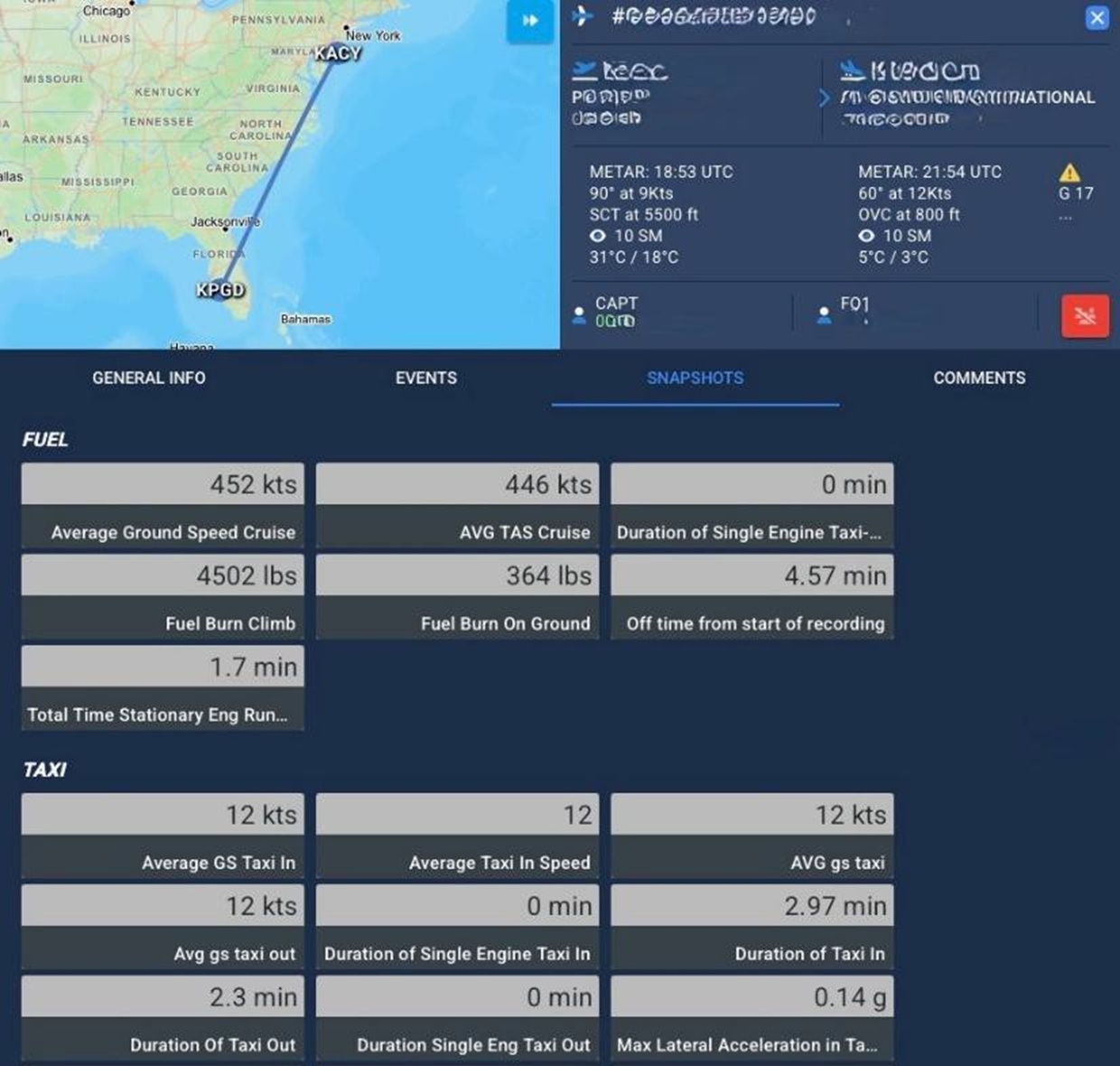
The FOQA Team is excited to announce the testing of a new front-end tool, the SARA Pilot Web Interface (PWI). This software will provide pilots with direct, user-friendly access to FOQA data on your iPad shortly after block-in.

With PWI, you will be able to review your personal flight data, identify any flagged events, and monitor trends over time. The goal is to support effective self-debriefing and enhance individual performance through greater insight and awareness. This is expected to be available by the end of 2026.

Sneak Peek: SARA PWI

This is the main screen from your personal flight. You will find the flight into, any event tags, snapshots, and comments. Seen here are some snapshots your flight has recorded for your review. You will also be able to leave comments for the Gatekeepers.


SARA PWI Main Flight Screen

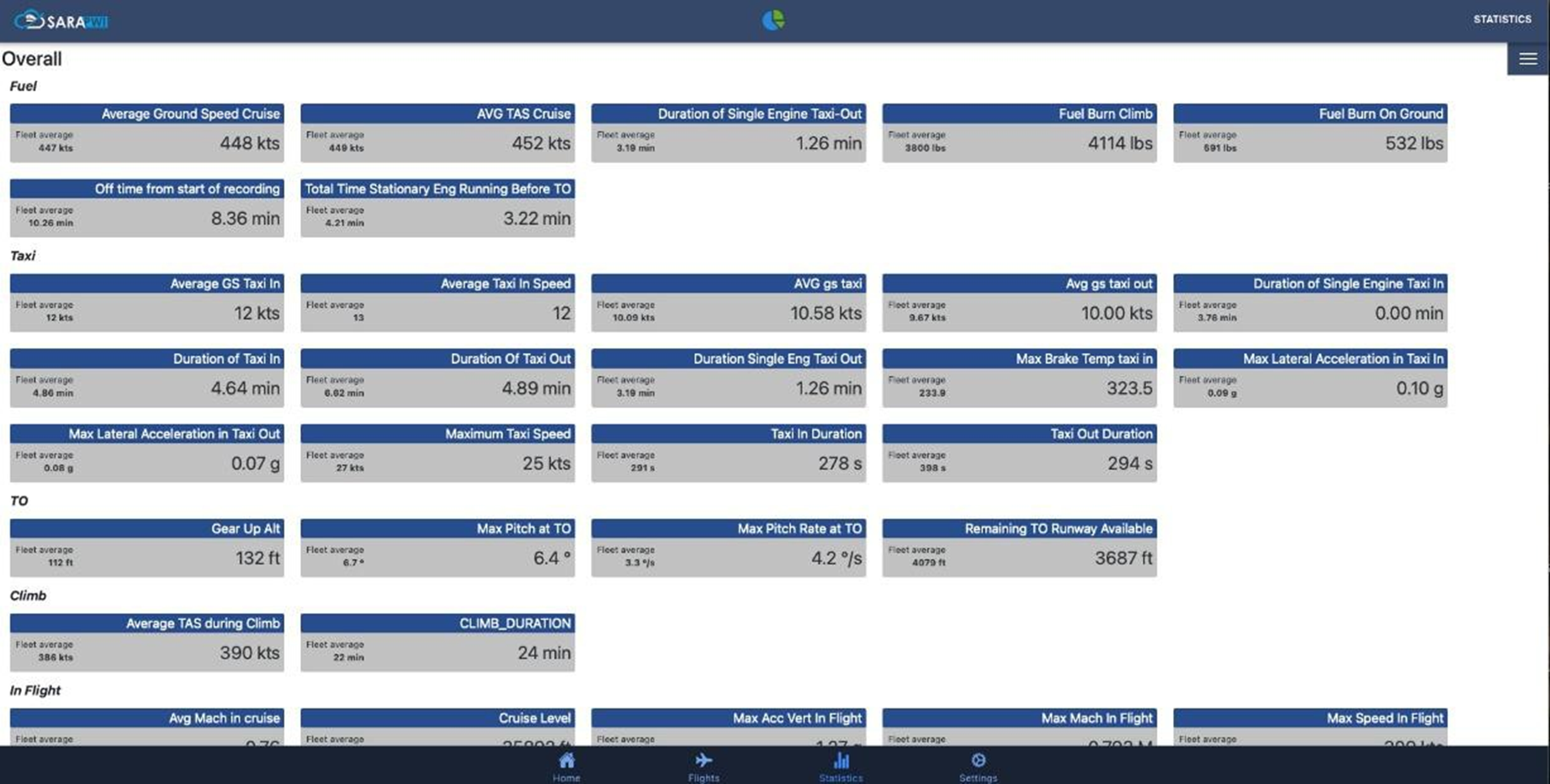
(Below) This is an overall snapshot that shows your personal FOQA data and how it compares to the overall average.


SARA PWI Overall Snapshot

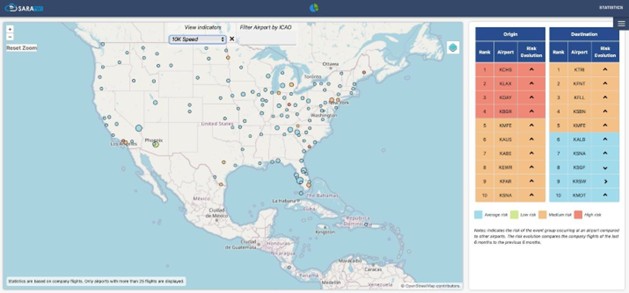
(Below) You will have the ability to see the risk of a specific event in a system-wide airport format. In this screenshot example, descending below 10,000 ft at speeds greater than 250 knots has shown highest risk at CHS, LAX, DAY, and BGR.


SARA PWI Airport Risk View

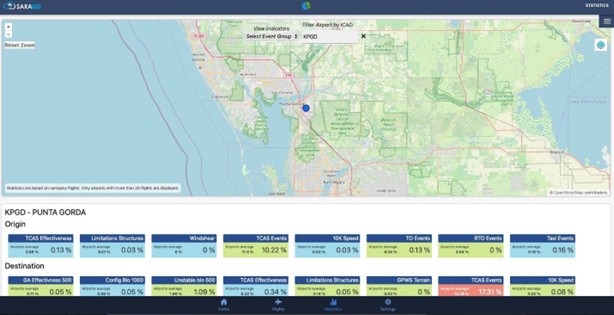
(Below) You can filter by a specific airport to see the airport specific event average. In the screenshot example, TCAS events are highest risk in PGD at 17.31%.


SARA PWI Airport Filter View

FOQA Data Request

Until this tool becomes active, pilots may continue to request their personal FOQA data at any time via the link found on the FOQA Committee page on the APA 2118 site.

You may also use the direct link: FOQA Data Request – Allegiant Local 2118

To process your request, the on-call Gatekeeper will require your company email address (typically in the format FIRST_NAME.LAST_NAME) and the request must pertain to a flight you personally operated.

As a reminder, all data remains de-identified and is protected under the FOQA MOA.

In Solidarity,
FOQA Committee
foqa@apa2118.org

2026 Q1 Newsletter – Benefits Committee Update

Benefits Committee Update

If you are one of the pilots due a true‑up contribution for your 2025 401(k), those funds should now be reflected in your account. The company initiated the deposit on March 30, and it may take a few days for the funds to appear in your Fidelity account.

The Benefits Committee is available to assist pilots with questions related to 401(k) plans, supplemental benefits, and medical benefits. We can also help guide you through leave‑of‑absence issues when needed.

If you have questions or need assistance in any of these areas, please contact the committee and we will be happy to help.

Fly safe,
Benefits Committee
benefits@apa2118.org

2026 Q1 Newsletter – Jumpseat Committee Update

Jumpseat Committee Update

The Jumpseat Committee would like to remind pilots to cancel their FedEx jumpseat reservations as soon as they become aware that they will not be using them. FedEx has specifically requested that cancellations be made at least six (6) hours prior to departure if a reservation will not be used.

Additionally, pilots are encouraged to allow extra time when traveling due to ongoing TSA challenges and to ensure compliance with all listing and check‑in deadlines required by our reciprocal jumpseat partners.

Fly safe,
Jumpseat Committee
jumpseat@apa2118.org

2026 Q1 Newsletter – Payroll Committee Update

Payroll Committee Update

The payroll committee now has 2 new members, Sam Seidman and Lance Blight and we are looking to bring on 1 or 2 more. Contact gharris@apa2118.org if interested. Otherwise, please contact the committee for all assistance at payroll@apa2118.org from your personal email with your contact information (including phone number) handy. If you have a JIRA response, which we highly recommend before you contact the committee, forward that to yourself and then to us. It is easier for us to QA crew payroll’s corrections than it is to analyze a grossly incorrect pay report. From that we will answer or contact you with additional questions to understand the sequence of events. Please click [here] for our full committee update.

Sick calls with insufficient sick balance

  • The current pay system cannot automatically apply partial sick hours to a pairing. If your sick balance as of the next month’s mid period paystub will be insufficient to cover a sick call within current month, but you want sick used to the extent possible, do a JIRA.
    • Ex: Pilot calls in sick for a 7 hour trip in March. Their end of March paystub shows 3 hours of sick pay. They can add 2 hours for what they’ll have on April 15th (5 hours), but this still does not cover the 7 hours. If the pilot does no JIRA they will lose all 7 hours, deducted from guarantee if <70 hours. If they do a JIRA, they will receive 5 PCH and -2 DTG and their sick bank will go to zero.

ABG and sub 70 hour lines – remember, transactions during SAP are not ABG

  • Merlot does not identify initial award line credit value when schedules come out. View Bid Award on G4 connect for actual PCH value factoring in things like duty rig, half DH, etc. to know if you are at or below 70.
  • Reassignments and over blocking are also not ABG if < 70 hours.

Access to pay post employment if departing

  • HRSystems@allegiantair.com can set you up with post employment UKG access for final paystubs, W-2s, etc.
  • Additionally, Download and save your final pay report; or email crew.payroll@allegiantair.com to get final audit.
    • These can be complicated and you may need to reach out to our committee for assistance, but try and follow the below guidance first.
    • How to evaluate pay when leaving:
      • As one example, a pilot might leave effective April 20. Prior to leaving, their pay sheet shows 70 hours guarantee and they had picked up 11 ABG, 3 PREM, and 4 VFN.
      • April 15, before they leave they should get April 1-15 35 hours plus March Overages.
  • Usually within a week or two from leaving, they’ll get:
    • Prorated Guarantee for April 16-20th (5 days x monthly guarantee/days in bid month regular pay). This equates to 11.67 hours.
    • 11 ABG, 3 PREM, 4 VFN.
    • Unused vacation payout

Minus Values on UKG paystubs

  • Pilots continue to have confusion with negative values being applied on paystubs.
    • For example, a pilot took 2 weeks of vacation in March, 40 hours. This is reconciled on April 15th paycheck as additional pay (they already got paid for thier guarantee in March, vacation wasn’t used then), so a negative 5 hour adjustment needs to take place to ensure the pilot arrives at half or prorated guarantee (40-5=35) and is not overpaid.
      • In the pilot who was leaving’s example, if they had 8 hours of sick calls in April before leaving, they would get 3.67 hours of regular pay and 8 hours of sick pay to arrive at prorated guarantee.

Tableau Daily Updates

  • If you don’t have these, please sign up. Hit the eyeball watch button in the blue header. Watch the “total” box in the top right to make sure it goes up or down according to what you’d expect. If not there is a problem.

Secretary-Treasurer Update

Please be reminded that the union should be notified whenever a pilot begins or ends a leave of absence.  It is very helpful for our dues coordinator and bookkeeper, Kristin Lancaster, to proactively be aware of the reason for the leave, expected length, etc, so that expectations and options can be discussed and unwanted fees or penalties do not accumulate. Generally speaking, military leaves allow a pilot to continue active membership without dues payment (Bylaws 16.C.5), pilots on other leaves are required to pay $62.98 per month (Bylaws 17.A) or take a withdrawal card (19.C).  Please also be aware of Bylaws 16.C.2 if you have any ambitions on being elected to an officer position in the future.  Also note that there may be some dues owed for the month beginning or returning from leave if sufficient dues were not collected from earned income. Pilots on honorable withdrawal are able to use AMAS while on leave as we recognize the importance of that service while on leave. They are also able to observe GMMs. Finally, if you leave the company, please also reach out to request a withdrawal. Kristin may be reached at duescoordinator@apa2118.org.


Fly safe,
Payroll Committee
payroll@apa2118.org

2026 Q1 Newsletter – ProStandards Committee Update

Professional Standards Committee Update

Your Professional Standards Committee is driven in support of our pilots and ensuring Professionalism within our ranks. As we continue to expand our network and drive towards this commitment we would like to send some reminders to our Pilots as we move towards the busy spring and summer season.

We understand that spring and summer schedules can be hectic but we would like to remind our pilots to be patient and respectful with other crew members and support groups. As Pilots we set the standards and tone with which all others follow. A professional Pilot will help ensure those around them act in kind. This will help ensure effective CRM and enhance safety during the peak flying seasons.

If you are having an issue with another crew member or an employee of another work group the first step is to always correct the behavior by verbalizing it towards that person. If that doesn’t work then that’s where your Professional Standards Committee can help.

As a reminder we are confidential but not anonymous. This means your report will have names but will never reach beyond the walls of ProStandards. Not with managers, not with other crew members or other work groups. Our committee members are specifically trained to mediate and help resolve issues pilots face at the lowest levels before developing into larger problems. If you are having issues we highly encourage you to reach out to us and not sweep things under the rug or shuffle them off to the next pilot. Professionalism begins with us and is our responsibility to set the tone for others to follow.

As stated in the GMM we have resumed talks with the CP office. We intend to pursue this relationship as laid out in our LOA contained within the CBA. This not only helps protect our pilots from needless section 18 meetings but also keeps our foot in the door on numerous issues surrounding our pilots.

Your Professional Standards Committee remains committed to its pilots and ensuring a positive and professional work environment. If you have any questions or are unsure of whom to reach out do any issue you can contact us at ProStandards@apa2118.org.

Fraternally,
Your ProStandards Committee
ProStandards@apa2118.org