Negotiating Committee – April 25, 2025

Reorganizing for Strength!


Fellow Pilots:

Bargaining Updates

The parties participated in a virtual mediation session on Thursday, April 24, 2025. During this session, the Company finally made a counterproposal to our January 15th, 2025 Section 15 – Scheduling and PBS LOA proposal. Let it be clear: the parties remain at an impasse. The Union’s decision to request a proffer of arbitration remains unchanged. In fact, the Company’s proposal only strengthens our resolve to seek a release from mediation. A proffer for arbitration is a required precursor to a 30-day cooling off period and any legal right to engage in self-help. Management’s proposals made it clear that they have no intention of reaching a voluntary agreement for a fair contract with its pilots. They expect you and your Union to capitulate to their concessionary demands when it comes to your seniority, schedule and quality of life.  That will not happen.  

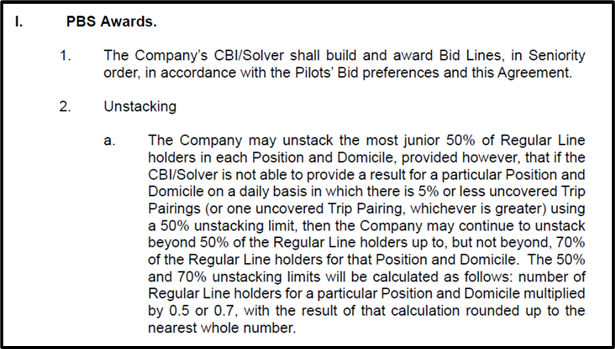
First and foremost, management’s re-packaged 70 percent unstacking proposal doesn’t move the needle. The company continues to reject the Union’s reasonable, data-driven, and industry-supported 30/50 percent unstacking proposal. That is why we remain at impasse. The unworkable, interim or bridge PBS they are now proposing is a classic “look over here, not there” proposal designed to distract attention from an attack on the seniority rights of 70 percent or more of the pilot group.

After years of avoiding any material commitment to progress, management suddenly has a surface-level interest in “collaborating” on a faster path to a commercial PBS. The Union’s unstacking proposal is fair, properly tested, based on empirical evidence, and accommodate the “unique” aspects of the Company’s operation without completely destroying the privileges and rights of your earned seniority. We have grieved, arbitrated, mediated, and litigated this very issue for the last 10 years. It ends now.

The Company now says it disagrees with the Union’s testing. In reality, they are angry that we proved our proposals actually work for pilots and the operation. Management created PBS testing parameters that were absurd and statistically improbable, anticipating that the Union’s inability to solve them would support their position. Despite operating with 20–40% fewer pilots per aircraft than peer carriers, Allegiant set an artificially extreme bar for the Union’s “successful” PBS tests. Some components of their statistically improbable (and designed to be unsolvable) worst case setup are:

  • Every pilot coordinates to submit an identical bid in NavBlue, intentionally avoiding peak flying days (e.g., Sundays). For reference: the probability of all pilots submitting the same bid is effectively zero p = (0.5)^1300 ≈ 0.00e+00
  • Worst case scenario must be solved to best case conditions in a company-defined “problem” or “chronically understaffed” base.
  • While understaffed, in the worst-case, the statistically improbable scenario test must simultaneously meet unrealistic solve parameters:
    • ○ ≥ 20% net reserve coverage (higher than CBI results)
    • 5% open time, preferably 0% (lower than CBI results)

The result is then compared to CBI baseline metrics—despite being based on worst-case, not standard, assumptions. The test was clearly rigged for failure so they could justify their positions.

Despite this, the Union successfully solved these absurd problems per management’s request, including in bases the company claimed were “problem bases” or “chronically understaffed,” management would then reject the testing results claiming the very same bases were now “overstaffed,” or “not a problem,” or some other reason to invalidate the results. When asked to provide their results for the same problems, they could not. Curiously, management has now changed their story to claim that their “testing” (which the Union has never seen) produces different results.

The surface bargaining and shifting narratives continues with their new “implementation timeline.” Suddenly, management’s original timeline of “up to 36 months” for implementation has been whittled down to just “within months of ratification.” But don’t forget – this is all predicated on the membership capitulating to the company’s 70 percent unstacking rule. Management appears happy to accelerate progress to an industry-standard commercial PBS system, so long as the pilots are willing to give up the Bloch award, accept concessions in PBS, and trade away their seniority protections just to get there. No!

From management’s update:

“We also addressed an issue we’ve all heard a lot about lately: unstacking. A lot of what the Union has recently said on this topic is inaccurate and misleading. In the coming weeks, we plan to address those points so you know the truth about how unstacking works.” 

Management continues to insist that they alone have a monopoly on “the truth.” Their managers, with a documented history of spreading misinformation and outright lies, will now use their less-than-elementary understanding of NAVBLUE and commercial PBS systems to explain to you how unstacking works—because clearly your Negotiating Committee and/or a cursory Google search is insufficient. The industry agrees how it works. The vendor agrees how it works. The only people that don’t agree are Allegiant managers. Perhaps they will enlighten us and the entire industry with their “truth” presentation. But while they are wasting their time, ours, and yours on presentations, keep in mind they refuse to agree to industry standard unstacking rules to protect your seniority, and no “presentation” will change that fact.

If our previous unstacking updates were “inaccurate and misleading,” in just a few sentences management could have:

  • Refuted the Union’s testing and reassured our pilots that they would not reduce headcount – they did not.
  • Refuted that they have demanded concessionary reversals of the Bloch award to “fund your pay raises” – they did not.

  • Refuted that their proposal actually allows for unstacking limits well above 70% of lineholders – they did not.
  • Refuted that their proposal does not place any limitations on peak vs. non-peak periods for unstacking limitations, the standard practice industry wide – they did not.
  • Refuted that they have a documented history of ignoring or attempting to delegitimize empirical data regarding PBS to better suit their narrative – they did not.
  • Refuted that management intends to significantly reduce Open Time flying – they did not.
  • Reassured pilots that regularly scheduling flying lines close to FAA maximum limitations is not a part of their scheduling “efficiency” plan for the future – they did not.

And when it comes to their overall lack of credibility, they could have:

  • Refuted that they refused to adhere to the binding Bloch Award arbitration after the PBS settlement with the union, only to lose their appeal in federal court – they did not.
  •  Refuted that management has plans to close additional bases in our system – they did not.
  • Refuted that management used the LAX pilots and their families as human bargaining capital and that narrative surrounding changing “economic conditions” as a lie – they did not.

As is standard at Allegiant, management is silent and unresponsive when faced with empirical data and facts. Unsurprisingly, management now needs extra time over “the coming weeks” to engineer the “truth” they need to show you—because only management knows the truth. Don’t waste your time reading it. Follow this link to learn “the truth” directly from the software vendor. Pay particular attention to the Processing Logic section for a deeper dive on how PBS really works.

From management’s update:

“…we’ve proposed that during the scheduling process, if the Union can come up with a solution that does not require more than 50% unstacking and complies with the other contractual and FAR rules, the Company will accept that solution. This proposal means that the Union will have the ability to ensure that the Company will not unstack beyond 50% so long as it can produce that solution…”

The emails and texts we received suggest that our pilots have already seen right through this. Surface bargaining disguised as “collaboration” and progress, while somehow putting the operational liability for staffing on its pilots. First, in the company’s proposals the Union would have absolutely no control over any of the key variables that affect unstacking – no control on staffing, scheduled trips, trip mix, open time, etc. The company would have complete discretion to change the variables at will—such as reducing headcount or manipulating trip construction—which would make solving unstacking impossible. Even still, management suggests that they would accept a solution below 50% unstacking—if only the Union could make it work. That’s the equivalent of management giving you a car with four flat tires, no spare, no roadside assistance, and no phone—and then saying, “If you can still make it to work on time, we agree not to discipline you.” It’s a recipe for decades more of the same: endless grievances, arbitration and lawsuits while the Company mows down our seniority rights and quality of life.

From management’s update:

“Out of respect for the mediation process, we’ve refrained from making direct comments about that request.”

After our proffer request, management has suddenly found “respect for the mediation process.” The company’s history of leaking confidential bargaining information, sending out cut-rate mailers to your spouse, spreading misinformation, disparaging the Union in recurrent ground school, spreading false rumors about the Negotiating Committee, and a host of other activities is well documented and will be shared with the NMB when the opportunity is presented.

The parties remain at an impasse. Management’s April 24, 2025 proposal has done nothing but reinforce that reality. Any messaging from the Company suggesting that progress was made, that they have moved in our direction, or have “given the Union everything they are asking for” is false. They have not. We remain committed to reaching a fair agreement that reflects the realities of our operation and the value you bring to this airline every day.

The Sky [Isn’t] Falling

Management continues to paint a dire economic picture to lower your bargaining expectations. Unsurprisingly, the data tells a different story. Allegiant saw a 14.4% growth in passengers in March alone, with an increase in revenue passenger miles (RPMs) of almost 16% as compared to the same period last year. Available seat miles (ASMs) grew much more aggressively, up more than 20%.

Management seems to conveniently “forget” its statements, on public record, about its own operation. Consider the following quote from Allegiant’s CEO Greg Anderson:

“…our model for the past 20 years has been wildly successful, whether high fuel, whether low fuel, whether it’s a strong economy or whether it’s a weak economy, we have consistently outperformed the industry.”

Management cannot have it both ways: proclaim growth and resiliency to Wall Street while complaining to pilots that they are “too poor” and need scheduling concessions to pay below market wages. Allegiant is not in “survival” mode. Our pilots deserve and will obtain a contract that reflects the reality of your contributions to this carrier. Your expectations should continue to reflect that.

Passenger Productivity

What really drives value? Passengers. “Allegiant” isn’t paid by the Block Hour – they’re paid for safely moving people. The question isn’t whether the aircraft flies on Tuesdays—it’s how much work our pilots do for every customer moved.

Based on the most current DOT information, Allegiant pilots safely transport the highest number of passengers per pilot of any airline in the industry – over 14,400 per pilot in 2023. Each pilot is responsible for 50.1% more passengers per year than jetBlue, 16.9% more than Spirit, 13.1% more than Southwest, 66% more than United, 115% more than Sun Country, and 51% more than Delta. Aircraft may be sitting, but the pilots are not.

You fly the most passengers per pilot – with less support, less schedule choice, less protections, and less pay than your peers. You are not underutilized, you’re underpaid – with the worst work rules across the industry. Enough is enough.

Financial Productivity

Empirical data can tell us more about our pilots’ contributions to the financial success of this airline. Between 2017-2023, Allegiant ranks #1 in average operating income per pilot – ahead of every ULCC, Delta, and United, and #2 in net income per pilot, second only to Southwest. You drive industry-leading financial performance for this carrier – money which was promptly spent on failing resorts, golf courses, family fun centers, and the like. Allegiant pilots are high value, not low cost, yet management continues to refuse to invest in its own pilots.

Consider management’s own words if there remain any doubt:

“Allegiant stands out with a revenue premium close to brand carriers like Delta, American, and United…” – Greg Anderson, CEO

“Our unique balance of revenue and costs drives higher margins than Delta, Alaska, JetBlue, Southwest, and Frontier.” – Greg Anderson, CEO 

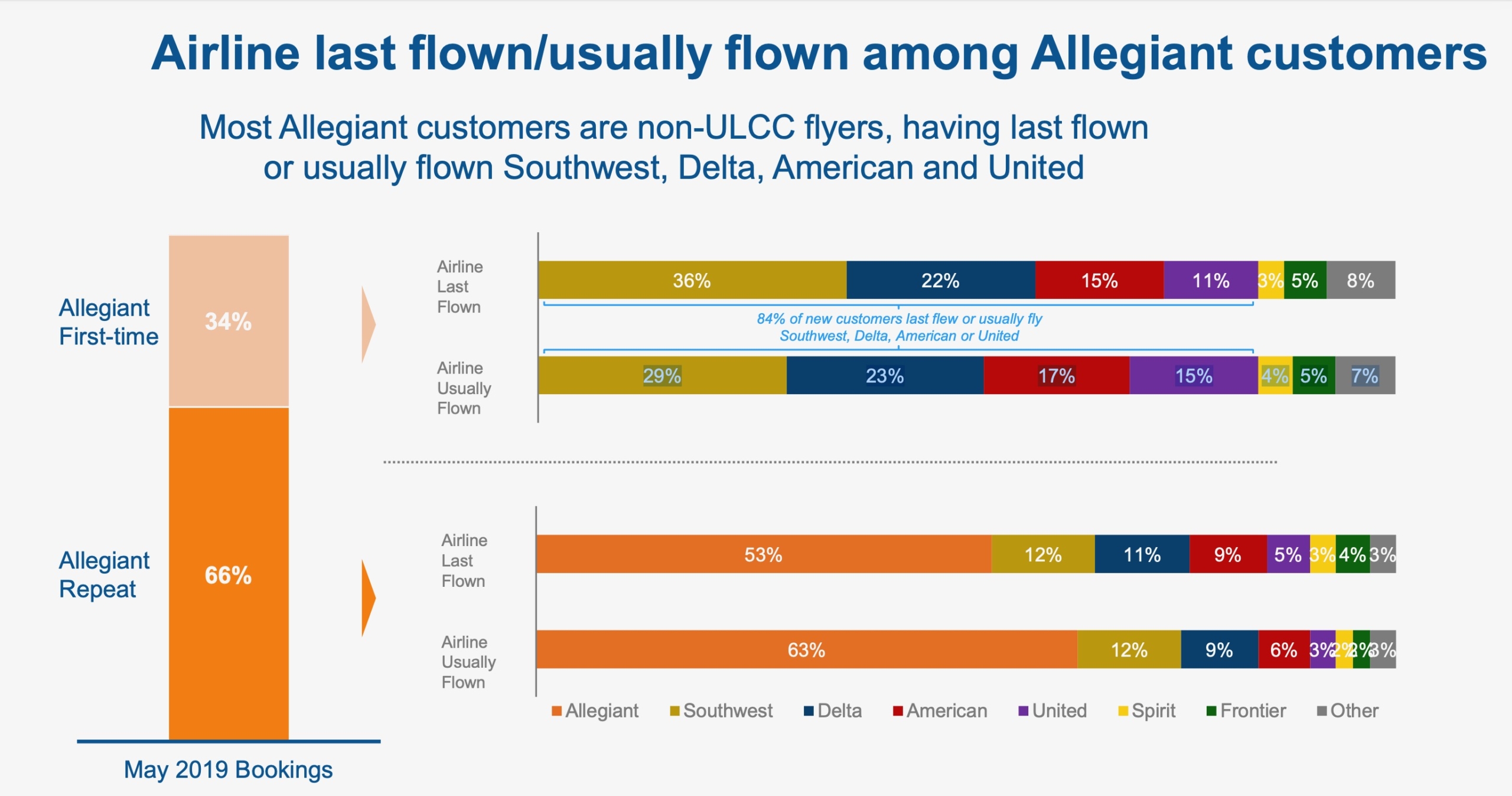
“…you might be surprised to know that our customers do consider other airlines before choosing us. And for the most part, it’s not other low cost carriers. It’s really the big four, Southwest, Delta, American, and United. They consider those airlines and they choose us.” -Scott Sheldon 

Whether the aircraft “sits on Tuesdays” or not is completely irrelevant to your work and contributions to this airline. Allegiant pilots produce significantly more for their airline than any of their peers – all within the confines of a bare bones operation with limited support when things go wrong. The Allegiant pilots schedule and quality of life are objectively worse compared to our peers thanks to no trip rigs, virtually no schedule construction rules, thinner staffing, less reserves as compared to our peers, and limited opportunities for schedule adjustment.

Ask our central Florida based pilots how much this so-called low utilization model improves their schedule quality—or how much it reduces the time they spend crisscrossing the state in Larry’s Limo to rescue a purposely understaffed operation. Ask any seasoned Allegiant Captain to describe their misadventures with outstation maintenance. The real Allegiant “difference” is that Allegiant pilots do more with less.

Management’s mistake is believing that our pilots should expect less—we do not.

In Closing 

The Union remains resolute in its decision; no further progress will be made nor will any fair agreement result from mediation without the economic pressure of a 30-day cooling off period and threat of strike. Allegiant’s games have run their course. We will not settle for a substandard agreement at this juncture.


In Unity,

Captain Joshua Allen
Negotiating Committee Chairman

Captain Jay Killen
Pilot Negotiator

Captain Brad Keller
Pilot Negotiator

Captain J.R. Lynch
Chief of Staff

Captain Jim Cole
Recording Analyst


Copyright (C) 2025 Allegiant Pilots Association, Teamsters Local Union 2118. All rights reserved.

You are receiving this email as a member of APA Teamsters Local 2118.

Trustee Update – April 25, 2025

Reorganizing for Strength!


Trustee Update: April 25, 2025

Fellow Pilots,

Thursday, General President O’Brien approved our proposed bylaws. We will mail out a referendum explaining eligibility, voting timelines, and the bylaws next week.

As I have communicated recently, Kristin Lancaster, along with Assistant Trustee Jim Clark, completed a thorough audit of membership dues records to get our membership records corrected. It was clear as we started to focus on election-related matters that Local 2118 did not properly document the good standing and the continuous good standing of its members, as required by the constitution. I wrote the General Secretary-Treasurer and the General President separately to ask for relief under the constitution on two separate issues.

    1. 172 current members owed a cumulative $22,000 and would be ineligible to vote in the upcoming voting.

Per Article X, Section 5(f), the General Secretary-Treasurer has approved this “zero correct”

  1. To be eligible to run for an officer position, you must have been a member in continuous good standing for the last 24 months. The local did not properly issue withdrawal cards, and did not explain to members their rights to remain in continuous good standing while on withdrawal by paying minimum dues.

I am awaiting a reply regarding the request that the General President, in accordance with Article II, Section 4(h), waive the 24-month good standing and continuous good standing requirements for members who have been on dues checkoff since July 2023.

These are rather extraordinary things to request and highlight how little regard was given to required bookkeeping operations.


PILOT MEETING REMINDER

Pilot Meeting; Zoom Meetings – REGISTER
Join us for an all-pilot call on Tuesday, April 29, at 3 PM Pacific Time.
We will discuss:

  • Bylaw Vote, Nomination Meeting, and Officer Elections
  • LM2 and Financial Review
  • Negotiations and Request for a Proffer from the NMB
  • Safety Committee Briefing
  • Q&A


Negotiations update to follow.

Fraternally,

Greg Unterseher
Trustee, APA Teamsters Local 2118


APA Logo

Copyright (C) 2025 Allegiant Pilots Association, Teamsters Local Union 2118. All rights reserved.

You are receiving this email as a member of APA Teamsters Local 2118.

Trustee Update – April 18, 2025

Reorganizing for Strength!


Good Friday, April 18, 2025

Fellow Pilots,

Ten years ago today, the Allegiant pilots were set to strike over the very same fundamental issues that face our pilot group today. Allegiant had started to pre-cancel flights, and those of you who were here were in lockstep with your Union after the company unilaterally implemented the infamous “Mavis Solver” and its “Must Work” days.

We have now formally requested to be released from mediation, as Allegiant demands that you accept concessions and return to pre-contract, pre-“Bloch Award,” scheduling rules that violate seniority, significantly reduce “headcount,” and are not seen at any U.S. part 121 union airline.

Your managers and Allegiant leadership talk about a “cooperative relationship” with the Union. They mean something else – appeasement and capitulation. The consequences of not bending to their demands are clear: Allegiant will attempt to divide you, willfully violate your collective bargaining agreement, and disparage the Union leaders it dislikes.

The path to what all of you want—a stronger union, a fair contract, and a career worth investing your pilot’s certificate in—comes through a strong, enforceable contract. The way to get there is to support your Union representatives who are tirelessly fighting on your behalf and to demand, from management, that they deliver the contract that you were promised without further delays. It takes a united Union membership that doesn’t let management divide them.

Pilot Meeting; Zoom Meetings – REGISTER
Join us for an all-pilot call on Tuesday, April 29, at 3 PM Pacific Time.
We will discuss:

  • Bylaw Vote, Nomination Meeting, and Officer Elections
  • LM2 and Financial Review
  • Negotiations and Request for a Proffer from the NMB
  • Safety Committee Briefing
  • Q&A

Negotiations
This morning, the entire negotiating committee and our economist met with the mediator. We will be meeting with the company next week on Thursday, April 24 for a virtual session with the mediator present.

Position, Bases, Displacement, and LAX
Your CBA was negotiated with a clear understanding of what happens when Allegiant closes a base. The company has properly issued formal displacement notices in the past, allowing affected pilots to exercise their seniority. Allegiant’s own 2015 proposal would have allowed negotiations each time an “involuntary base transfer” occurred, but the Union’s language prevailed. That language has since been honored—until now.

The question is: why reinterpret seniority rights and render Section 6.E.2 meaningless? Because Allegiant manufactured a crisis to save money and undermine the Union. The company used fear, misinformation, and denied pilots their contractual rights—all to weaken us.

Interference
Allegiant has a long history of relentlessly trying to influence who represents the pilots to control and dictate outcomes. Through the manipulation of the in-house representatives, AAPAG to Maury’s famous “not another f***ng airline letter” [link].

Allegiant is obsessed with spewing self-serving narratives, spreading BS and lies, and trying to turn pilots against each other and your Union, using proxies, managers, and its training centers all for its own benefit.

But they are prohibited from interfering in your free choice of representation, helping in decertification efforts, providing resources, or advocating for specific union candidates they believe will be more “cooperative.” They can’t single out individuals and fill them with talking points meant to undermine the Union, misrepresent our positions and weaken our negotiating position.

The right to dissent within our democratic Union is not disputed, but members also have responsibilities to their Union and the membership. Members must honor their commitment to the organization and their fellow union brothers and sisters and report management efforts to interfere in the internal affairs of the Union and those who engaging in that effort.

Viva Aerobus
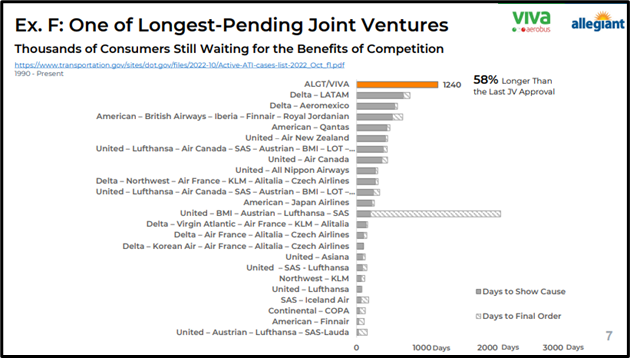
Allegiant has renewed its joint motion with Viva Aerobus to reinstitute the procedural schedule for approving its application for antitrust immunity for a commercial alliance agreement with the Department of Transportation.

The union filed an Answer to the filing, which can be found here.

To be clear, the Teamsters will vigorously oppose the application until an agreement on the distribution of flying between Viva Aerobus pilots and Allegiant pilots is reached.

Fraternally,

Greg Unterseher
Trustee, APA Teamsters Local 2118


APA Logo

Copyright (C) 2025 Allegiant Pilots Association, Teamsters Local Union 2118. All rights reserved.

You are receiving this email as a member of APA Teamsters Local 2118.

Allegiant Air Pilots File for Release from Mediation

NEWS FROM     

Teamsters Local 2118

10000 W. Charleston Blvd., Ste 220

Las Vegas, NV 89135

(702) 268-7591

For Immediate Release
April 17, 2025 
        

Contact:
Josh Martin, (725) 308-2755     
jmartin@apa2118.org 

ALLEGIANT AIR PILOTS FILE FOR RELEASE FROM MEDIATION 

1,400 Teamsters Fight for Fair Contract at Carrier  

(WASHINGTON) – Allegiant Air pilots represented by Teamsters Local 2118 have requested that the National Mediation Board (NMB) release them from mediation with the company.

If the request is granted, the NMB may offer binding arbitration to resolve remaining issues between Allegiant and its Teamsters pilots. If either party declines arbitration, a 30-day “cooling-off” period would begin, after which the pilots could legally strike. Last November, Allegiant pilots voted by an overwhelming 97 percent to authorize a strike, signaling deep frustration with the company’s delays and refusal to address core issues.

“Since we began negotiations, our goal has been simple: secure a contract that ensures long-term success and security for both our pilots and Allegiant Air,” said Captain Josh Allen, Local 2118’s Negotiating Committee Chair. “And every step of the way, Allegiant has refused to offer us that.”

After more than two years of mediated talks, the parties have yet to resolve fundamental scheduling concerns in the collective bargaining agreement. Allegiant’s latest proposals would allow the company to deem approximately 20 percent of pilots as surplus and force the rest to fly maximum schedules — raising serious concerns about pilot fatigue, operational reliability, and quality of life.

“It’s impossible to make progress when the company keeps moving the goalposts and demanding more ‘efficiencies’ from an already-stretched pilot group,” said Greg Unterseher, Trustee of Local 2118. “Each time our pilots rise to meet the company’s needs with good-faith proposals, Allegiant shifts direction again. Enough is enough — it’s time for Allegiant to finally deliver the fair contract its pilots have earned.”

Teamsters Local 2118 represents 1,400 hardworking Allegiant Air pilots nationwide. For more information, go to apa2118.org

Strategic Preparedness Committee – Importance of the Strike Vote

Fellow Allegiant Pilots,

Today’s number is 97. That’s the percentage of pilots who voted YES to strike authorization—an overwhelming statement of unity and resolve. And we believe that number would be even higher if the vote were held today.

We’ve reached a critical point in this process. Make no mistake—our strength will continue to be tested. Many of us joined Allegiant with the intention of building a long, fulfilling career. But intentions alone are not enough. We know our worth.

We’ve sacrificed, we’ve shown up, and we’ve delivered. Now it’s time to secure an industry-standard contract that reflects our value. Anything less than a fair deal that aligns with today’s market is unacceptable.

That’s why we’re officially launching the We Are Ready Campaign. And remember: 97%. We will strike if we have to.


Stay alert and stay engaged—critical updates are on the way. Fight On!

In Unity,

Aaron Adrian
SPC Chairman
APA Teamsters Local 2118

Negotiating Committee – April 14, 2025

Reorganizing for Strength!


Fellow Pilots:

Forced Work + No Preferences = Less Pilots

This is a simple, data-driven exercise that you can imagine for yourself. If you own a business and can force your employees to work at-will, on the days of your choosing, you need significantly less people in your workforce. In the case of an airline, if your only “structural” limits are FAR Part 117 rules and a few limited scheduling provisions, both the number of pilots in the workforce and the resultant quality of life for those pilots who remain reduce dramatically. Our pilots are a resource to invest in, not simply a property-like cost that must be controlled as management prefers.

Management has not been coy about their desire to minimize headcount and increase productivity through force. The only cost is your quality of life, your real earnings, and fewer pilots on property – sacrifices management is obviously willing to make. Management repeats the “unique business model” and “operational necessity” excuse, hoping for emotionally driven concessions. Fortunately, data is not swayed by emotion. High unstacking/forced work is not a “necessity for our unique operation” and the data proves it. Removing your seniority from the equation and forcing work is a wholly unacceptable concessionary proposal that predates these negotiations.

The idea that giving management a concessionary contract is necessary for the company’s survival is nonsense. In conjunction with a strong business model, a fair contract increases productivity and profits. Airlines like Southwest and Alaska achieved record earnings under new pilot contracts, while still respecting seniority and providing for a decent quality of life. Allegiant would be wise to do the same.

Continued Clarification Regarding Current CBI

There continues to be some misinformation regarding schedule, specifically that the company’s offer is superior to CBI with respect to honoring seniority and preferences. It is worth repeating that CBI is a 0% unstacked solution as guaranteed by the Bloch award. The company’s proposal on PBS represents a major concession from the current contract.

Some think, “My schedule is great, I don’t see the problem”.

Your schedule is satisfactory because the Bloch award guarantees that your seniority is honored in CBI. The status quo will change and will be worse under the company’s proposal. In the company’s proposed scheduling environment, broad, new unstacking rights would give the company the ability to ignore seniority and build schedules entirely at management’s discretion. Management has previously made it clear that any improvement to pilot pay must be tied to concessions in scheduling. In their proposal, you are buying your pay rates through giving up seniority, your quality of life, and sacrificing our junior pilots.

As any labor union would, we find this proposal wholly unacceptable.

Disciplined Bargaining

The RLA bargaining process is time consuming, difficult, and frustrating. Many pilots question why we remain in mediation when the company and Union have not been able to reach an agreement on fundamental working conditions while management engages in bad faith behavior, shows a lack of cooperation, and disregard for the bargaining process. First, the National Mediation Board alone determines if and when the parties are released from the mandatory mediation process. Second, as discussed below, we wanted to use all of the means at our disposal to try to reach an agreement before we requested a release to self-help, which is a costly, last resort option available to both parties if released from mediation by the NMB. Because of its potential economic impact, self-help is never the desired outcome, but sometimes the only viable way to reach a fair and enforceable agreement.

There is no operational need for the company’s concessionary and extreme bargaining demands. Moreover, through deliberate stalling, misinformation campaigns, and bad faith tactics, management has attempted to use mandatory mediation time to wear down and divide the Union. They know that the RLA process requires the parties to spend a substantial amount of time in negotiations before being released by the NMB, and they attempt to use that delay to their advantage—engaging in “surface bargaining” to make minimum progress while creating division in our ranks in an attempt to entice pilots to accept concessions and settle for less.

Instead of frequently complaining, we used a disciplined, data-driven approach to provide solutions to each and every company problem they presented, no matter how “unsolvable” or trivial, in an attempt to reach agreements; we could not. We kept detailed records of the company’s behavior, including shifting positions, their near “unsolvable” parameters and frequent obstructionism.

We believe a 30-day cooling off period, followed by self-help, if no tentative agreement is reached, is necessary to produce a contract. We have a well-documented, evidence-based case to present to the National Mediation Board (NMB) should a status meeting be granted. Our reports include a detailed record of why we have reached an impasse, the company’s conduct at and away from the bargaining table, the Union’s good-faith efforts, and our conclusion that a release to self-help is justified and necessary to reach a fair agreement.

Self-Help Process FAQ

Based on our filing to the NMB requesting release from mediation, some of our pilots have additional questions regarding the NMB bargaining process, the status of mediation, and the possibility of self-help. Over the next several updates, we will attempt to answer all of your outstanding questions. Additionally, expect more communication and to receive a Strike Preparation Handbook from the SPC.

1. Is there a timeline or time limit for the NMB to respond to the Union’s request “for a proffer of arbitration”?

No. The NMB has full discretion and there is no mandatory timeline to respond to a request for a proffer of arbitration, the formal name for a request to be released from mediation. There is no statutory deadline and the NMB will base their decision on multiple factors. A status meeting between the parties and the NMB may occur before a decision on our proffer request will be made. During the status meeting, the Union will present its evidence-based case for how the company’s proposals and conduct have created the current impasse. If a status conference occurs, management will also be given the opportunity to present its case.

2. How long does the process generally take if the mediator grants our request? When can self help begin?

To clarify, while mediators provide their opinion to the NMB, mediators do not grant or deny a request for a proffer of arbitration. A proffer request and related decisions are made by the three member, presidentially appointed NMB members. If the NMB makes the proffer of arbitration and either party rejects arbitration (which the Union will), then the 30-day cooling-off period before self-help can legally begin starts immediately. The parties can lawfully engage in self-help immediately after the cooling off period expires.

3. What is self-help and what can the Union do during that time?

It is commonly misunderstood that self-help simply means a strike alone. In reality, self-help applies to both parties equally under the law. During self-help, the Union may legally strike the employer, either in full or in an intermittent, unpredictable fashion. At the same time, the employer can lock out employees and unilaterally change wages, rules, and/or working conditions (e.g., implement the “mailer”) in an attempt to encourage pilots to cross the picket line to work (“scabbing”). An employer can also attempt to hire replacement workers, although the training for flight crews makes this costly and impractical.

4. If the NMB grants our request, what should we expect and how long will it take?

There is no timeline for the NMB to make a decision on a request for a proffer of arbitration/release. If the NMB decides to make a proffer, the parties will be notified that the NMB has terminated its services and is making a proffer of binding arbitration. The parties will either accept or reject arbitration. If either or both parties refuse arbitration, the NMB immediately releases the parties into a 30-day cooling off period.

During the 30-day period, it is common for the parties to engage in “super mediation.” This is a compressed period of multiple, intense bargaining sessions with the intent of reaching an agreement to avoid a strike. If this does not lead to an agreement, the parties will be released to self-help at the end of the cooling off period.

5. If the NMB does not grant the request, what happens?

If the NMB believes that further mediation without economic pressure could be productive and lead to an agreement, the request may be denied. The parties will remain in mandatory mediation. The Union believes that it has gone well beyond every reasonable effort to make an agreement. We do not believe further “no stakes” mediation will lead to an agreement.

Your Duty as a Pilot

Consider the source; they’re not “just like us” – Regardless of their flying background, managers are just that, managers. They aren’t “just like us” and they aren’t “here to help.” These former line pilots are not like you and do not bargain for your best interest. Most have vested stock options, the freedom to control their own schedules, and they won’t live under the contract they are negotiating “for you.” Should they ever return to the line, they’ll have the privilege of avoiding the worst of whatever is negotiated through their seniority.

Combat Misinformation
– There is a significant amount of misinformation being spread on non-official forums and group chats. It is every pilot’s duty to speak up and out against misinformation, especially against those most clearly aligned with management’s agenda to undermine our unity and subvert the Union’s bargaining authority. Silence is surrender.

Report Illegal Behavior – By law, management cannot interfere with union affairs in any manner, especially one which affects their ability to bargain or represent its members. Inappropriate and reportable behavior includes, but is not limited to:

  • A manager suggesting, encouraging, or directing a “decertification” or “start an ALPA drive” effort in any form, as some managers have been known to do (including those managers who approached members of your Negotiating Committee asking them to participate in such actions).
  • A Check Airman or Instructor who utilizes a training session, scheduled or “surprise” line check, or other official event to disparage or undermine the union, encourage certain political outcomes, or similar behavior. Any training/checking event should be free from Union, management, or political pressures.
  • Management conversations (including calls, texts, or emails) with line pilots about their preferences for Union representatives or representation, or how to resolve disputed issues during negotiations.
  • Any individual, manager or otherwise, who actively colludes with Allegiant to undermine the representational effectiveness of the Union.

Report any suspected violations to negotiations@apa2118.org. As we prepare for a potential status meeting with the NMB, additional reports will be particularly useful over the coming days and weeks.


In Closing


Thank you for your support. We look forward to delivering an agreement worthy of your vote very soon.

In Unity,

Captain Joshua Allen
Negotiating Committee Chairman

Captain Jay Killen
Pilot Negotiator

Captain J.R. Lynch
Chief of Staff

Captain Jim Cole
Recording Analyst


Copyright (C) 2025 Allegiant Pilots Association, Teamsters Local Union 2118. All rights reserved.

You are receiving this email as a member of APA Teamsters Local 2118.

Trustee Update – April 11, 2025

Reorganizing for Strength!


Allegiant Pilots:

As you know, Allegiant Air management—emboldened by a vocal minority among our ranks—has made it a mission to undermine our resolve and collective bargaining power. In a predictable move, management has chosen to use the families and pilots of the LAX base as human leverage, using a strained “changing economic conditions” excuse to justify reneging on their prior verbal promise of support to every LAX pilot and their families during this difficult base closure.

The affected pilots and families in Los Angeles should know that the Union is fully committed to securing the promised MOU.

Many of you have expressed a concern that management intends to implement unilateral changes to our work rules through updates to the General Operating Manual (GOM). We will be addressing the unacceptable changes regarding contact ability with the company next week.

Chief pilot Hardesty is not authorized to give “union updates”. His misleading message about Professional Standards is a wholly unacceptable attempt to slight your union. Like any other airline labor union in America, the Professional Standards Committee is a tool for peer-to-peer use. It is not the company’s police force or the “shoes, beards, and uniforms” committee. There are no restrictions from company managers professionally mentoring their pilots in a non-punitive manner. Professional Standards at Allegiant Air will have its mission aligned with industry-normalized practices.

Additionally, linked in this message, you will find an update from the Negotiating Committee outlining the bargaining status. Most notably, despite our best efforts to the contrary, we believe the parties are at an impasse. Allegiant’s delay tactics, surface bargaining, untenable positions, and continued disregard for the process and the mediator’s instructions simply will not result in an agreement. After 4 years of heavy bargaining, we have formally filed a Proffer for Arbitration request and a Status Meeting with the NMB. The NMB was notified that binding arbitration, if and when offered, would be rejected which would start the “30-day cooling off” immediately thereafter.


While management appears eager to revert to the “Allegiant of old,” the overwhelming majority of us recognize these maneuvers for what they are: an effort to intimidate and control. The strongest labor union in the United States will not bend to Allegiant’s behavior.


Fraternally,

Greg Unterseher
Trustee, APA Teamsters Local 2118


Copyright (C) 2025 Allegiant Pilots Association, Teamsters Local Union 2118. All rights reserved.

You are receiving this email as a member of APA Teamsters Local 2118.

Trustee Update – April 9, 2025

Reorganizing for Strength!


Allegiant Pilots:

LAX Base Closure

I know how troubling the announcement of the LAX base closure was for the affected pilots and the entire membership. More troubling is how managers have decided to weaponize an MOU intended to help alleviate the uncertainty and hardship caused by management’s decision to close The Los Angeles base.

During the negotiation of the Austin MOU, there were multiple passes, meetings with affected pilots, and the assurance that pilots would not be denied any base. While VBD had a limitation, a census was taken, and the company agreed to a mutual agreement clause that would allow us to revisit if a pilot bid for and did not get awarded the VBD.

The company LAX MOU did not ensure those things. Further, the union’s intention was to improve as many areas as we could, including extra moving costs, parking for commuters, and lease termination expenses. The Union had no hard line; we wanted the get most help for the affected pilots we could negotiate.

Now, the company is creating more uncertainty surrounding its decision to close LAX by not discussing its plans with your representatives or the members who reach out directly to management. RCP Schmidt wrote the LAX pilots today, in part:

We recognize that Monday evening’s email regarding the LAX Base Closure MOU and subsequent vacancy bid has raised several questions and concerns. While we don’t have all the details at this moment, we will be providing further information in the coming days.

There is little reality that the real reason for withdrawing the MOU is as CP Hardesty wrote:

Unfortunately, due to the current environment the company is facing and the rapid change in economics, the leadership has made the determination that the terms previously offered in the MOU are no longer viable.

There is a small dollar cost associated with treating your pilots fairly. However, it seems that senior managers saw an opportunity to use LAX pilots as cannon fodder in an attempt to weaken your union, creating false narratives.

  • 24 February – I received a phone call from VP of Labor Relations Bill Fishburn, informing me that the LAX base had been bleeding money and that the decision had been made to close it in September. We discussed negotiating an MOU fashioned after the Austin Base closure and getting it in front of the pilots ASAP. As I have discussed with managers in the past, base closures at Allegiant are unusually painful compared to other airlines due to the nature of the schedules, the inability to commute, and the costs associated with selling your home or vacating a lease.
  • 03 March – Base closure announced.
  • 04 March – Base meeting with management. I spoke with many LAX pilots and reached out to the company to discuss their plans.
  • 07 March – The VM that was left with CP Hardesty was returned, and for an hour, we discussed the base closure, the meetings he had, and the concerns that both of us had regarding the closure. He seemed surprised by the closure announcement. He agreed to get a draft MOU going via Fishburn.
  • 12 March – I left a VM for Fishburn inquiring about the status of the promised draft MOU.
  • 18 March – Fishburn sends text that states, “Hey Greg. Got your voicemail. I am out of the office this week but will get something over to Rod no later than tomorrow to review and send over to you.”
  • 20 March – Sent Email to the company regarding their delay in sending their draft. (see email chain below)
  • 21 March – Almost a month later, the company sends a signed MOU in PDF. No negotiation, no collaboration. I asked for and received a Word version of the document and started to work on the union’s revisions.
  • 07 April (Two weeks later), the Company pulled the MOU and strongly suggested that it was the union’s fault for not agreeing to the company’s terms quickly enough.


Management, by their own volition, made the decision to close your LAX base, displace you, destroy the cohesiveness of your families, and place doubt in your future career. It was a financial decision, not a human one. Management wants the Union to take responsibility for their ineptitude. We will not.

What “factors” could so drastically change over the last two weeks that absolve themselves of the human responsibility to care for our pilots and family members whose lives they disrupted? If management truly cared about you and your families, why would they not respond to our multiple inquiries to make an agreement? Management is using the LAX pilots and their families as bargaining capital, using this premeditated misfortune to incite anger and undermine our union. It will not work.

We remain committed to fighting for the best possible outcome for the LAX pilots.

Fraternally,

Greg Unterseher
Trustee, APA Teamsters Local 2118


Copyright (C) 2025 Allegiant Pilots Association, Teamsters Local Union 2118. All rights reserved.

You are receiving this email as a member of APA Teamsters Local 2118.

2025 Quarterly Newsletter – January 1–March 31

Allegiant Pilots Association Teamsters Local 2118
2025 Q1 Newsletter
 

Allegiant Pilots,

Welcome to the Q1 Committee Newsletter — a quick look at key updates from your APA Teamsters Local 2118 committees. Thank you to all committee chairs and members who contributed valuable information this quarter.

All updates are also posted on their respective committee pages at apa2118.org for ongoing access. Keep an eye out—important updates from the Trustee will be released in the coming days, covering Voting, Safety, and Negotiations.

If you know a pilot who didn’t receive this newsletter or needs help with website or Union Impact access, have them contact Josh Martin, Communications Specialist for APA Local 2118 directly for support.

Committee Updates

  • Benefits & Compensation
  • CIRP
  • Communications
  • FOQA
  • HIMS
  • Hotel
  • Jumpseat
  • Military
  • Payroll
  • Professional Standards
  • Scheduling
  • Stewards
  • Strategic Preparedness Committee


Benefits & Compensation Update

The Benefits & Compensation Committee has compiled the latest information on 2025 retirement contribution limits, income caps, and other key financial planning details that impact Allegiant pilots. From 401(k) strategy and after-tax considerations to IRA limits and Social Security updates, this guide is essential for planning your financial year ahead.

Highlights include:

  • 2025 401(k) contribution limits and matching policies
  • Safe strategies for After-tax contributions and ROTH conversions
  • Income limits for Traditional & ROTH IRA contributions
  • Updated Social Security wage base and tax maximums

Important Disclaimer: This information is for reference only. Always consult with a tax or financial advisor before making decisions. If you spot any errors, please contact Benjamin Phillips for correction.

Visit Benefits & Compensation Committee Update

CIRP Committee Update

In the face of challenging events, it’s vital to recognize that emotional and physical responses are normal — and that no one has to face them alone. The Peer2Peer and CIRP Committee is here to provide guidance, support, and resources when they’re needed most. Whether you’ve recently experienced a critical incident or want to better understand the signs of stress, we encourage all pilots and family members to review this important update.

Visit CIRP Committee Update

Communications Committee Update

We’ve heard from several pilots experiencing issues accessing the apa2118.org website or the mobile app. The Communications Committee has rolled out an improved IT Support Form and outlined clear steps to help members regain access. In addition, we’re reminding all pilots to keep their Union Impact contact information current to avoid missing critical updates.

Visit Communications Committee Update

FOQA Committee Update

The FOQA Committee has observed a notable increase in the frequency and severity of aircraft handling events in the first quarter. Many of these incidents stem from pilot monitoring deficiencies and exceedances, reinforcing the importance of adherence to aircraft limitations and best practices.

Key areas of concern include:

  • High Speed Below 10,000 ft. – Managed speed deviations may occur momentarily, but selected speed descents causing violations are not acceptable.
  • Structural Exceedances – Poor airmanship and insufficient monitoring have led to preventable exceedances. Pilots must maintain awareness and avoid operating at absolute limits.
  • Stabilized Approaches – Stability must be achieved by 500 ft. VMC / 1,000 ft. IMC, with the aircraft in the correct configuration. If stability criteria are not met, an immediate go-around should be executed—no hesitation, no questions asked.

The FOQA Committee urges all pilots to stay vigilant, communicate effectively, and prioritize airmanship to uphold safety standards.

Visit FOQA Committee Update

HIMS Committee Update

The HIMS Committee continues to make strides in supporting pilots and their families through industry-leading advocacy and recovery resources. This April, our team will attend the HIMS Advanced Topics Training Seminar at UPS Flight Operations Headquarters, alongside key industry stakeholders, including the FAA and an Allegiant representative. This event strengthens our efforts to preserve careers and provide critical support for those in need.

Additionally, our partnership with the Company continues to grow, reinforcing the shared commitment to enhancing and protecting the HIMS Program. If you or a loved one are facing challenges with substance abuse or alcoholism, know that help is always available.

Visit HIMS Committee Update

Hotel Committee Update

Your Hotel Committee continues to advocate for quality accommodations and travel arrangements. Here are key updates from our latest quarterly meeting:

  1. Sunseeker Resort: Space-available upgrades for TDY/VBD crews based on seniority (long stays only).
  2. PUJ Overnights for CVG & PIT Crews: New overnight schedules, hotel details, and recommendations.
  3. Hotel Incidentals: You are never required to provide your credit card for room charges—know your rights.

Visit Hotel Committee Update

Jumpseat Committee Update


Good news for jumpseaters! FedEx now allows non-FedEx pilots to jumpseat to and from Puerto Rico. We’ve provided key details on flight schedules, listing procedures, and passport requirements for these routes.

Additionally, a reminder for OAL pilots: Allegiant jumpseat listings must be made via MyIDTravel at least one hour before departure. If technical issues arise, gate agents can manually list jumpseaters—and we outline how to ensure that happens smoothly.

Visit Jumpseat Committee Update

Military Committee Update

The Military Committee continues to support our Veteran, Retired, Guard, and Reserve pilots in critical areas such as FAA Medical Certification, VA Disability Concerns, and Military Program mentorship. A recent update to the Military Committee page includes important reminders about Military Leave of Absence (MTLV) submissions and how early planning helps ensure proper staffing and operational efficiency.

Visit Military Committee Update

Payroll Committee Update


As we head into summer flying, the Payroll Committee has important reminders regarding pay errors, multi-day trip pay issues, composite line nuances, and how to handle JIRAs effectively. Staying on top of these items is essential to ensure you’re paid correctly and understand how crew payroll processes your trips.

Visit Payroll Committee Update

Professional Standards Committee Update


Your Professional Standards Committee has been hard at work, supporting pilots through various challenges, expanding our reach, and reinforcing professionalism across the operation.

  • Assisting with the Fatigue Program and Instructor Pilots
  • New support for International Pilots—contact FO Nick Bordes for assistance
  • Encouraging professionalism and the proper use of AirSMS for fair reporting
  • Reminder to keep CrewMobile name changes professional
  • New Mission Statement added for Professional Standards Committee

Visit Professional Standards Committee Update

Scheduling Committee Update


Your Scheduling Committee is working hard to address pilot concerns—despite being a team of just two SFB-based Captains covering the entire pilot group. To better assist you, they ask that all inquiries include essential details like your name, base, seat, employee number, and a phone number for quicker follow-up.

The Committee is also actively seeking volunteers to help support our growing needs.

Visit Scheduling Committee Update

Stewards Update


Your Union Steward Team is your first point of contact for contractual guidance, policy concerns, and disciplinary representation. This dedicated group of Captains meets weekly with union leadership to ensure pilots receive timely support. In this update, we introduce your current Union Stewards and share key reminders to help you avoid preventable discipline—from ensuring your medical certificate is uploaded on time to logging aircraft issues properly.

Visit Stewards Update

Strategic Preparedness Committee


After four years of negotiations, we have reached a critical point. As the company continues to delay a new contract, it is imperative that our members be further educated on the process in the event an agreement isn’t reached. The Strategic Preparedness Committee (SPC) has been actively fighting for a contract that reflects our worth, but management continues to stall.

Since September 2024, we have:

  • Held nationwide informational picketing
  • Deployed advertising billboards and mobile billboard trucks
  • Engaged in media interviews to amplify our message
  • Voted 97.4% in favor of a strike

Despite our efforts, management refuses to provide a deal that values our contributions. Our patience has run out. In the coming days, we will release the Allegiant Pilots Strike Preparation Handbook, outlining key details should legal self-help become necessary.

Visit Strategic Preparedness Committee Update


Thank you again to everyone who contributed to this quarter’s newsletter. Your input helps ensure our members stay informed and connected across the system.

If your committee did not have a chance to submit an update for this edition, it’s not too late—please send it to Josh Martin, Communications Specialist for APA Local 2118 directly, and we’ll make sure it’s added to your committee’s page and shared with the membership. We’re committed to building a stronger, more unified pilot group through consistent communication. Let’s keep it going.


In Unity,

APA Teamsters Local 2118

Copyright (C) 2025 Allegiant Pilots Association, Teamsters Local Union 2118. All rights reserved.

You are receiving this email as a member of APA Teamsters Local 2118.

Trustee Update – March 28, 2025

Allegiant Pilots:

This week, we met with the company for two days with our economist and the company costing and scheduling team. Also, our Bylaw corrections, which I discussed last week, were finalized, and the Bylaws are making their way to the General president’s office for approval. One note: the minimum dues of $25 (discussed in last week’s message) for a pilot on a leave of absence to remain in good standing were amended to the minimum monthly dues for the lowest contractual rate in effect.

Next Week


  • Stewards will be in Las Vegas for training and discussions regarding best practices to represent pilots in the grievance process.
  • The Negotiating Committee will meet with the company to continue dialog outside mediation.

Safety Committee


  • Captain Shawn Rials has accepted the position of Safety Committee Chairman. The committee will be structured slightly differently than in the past and will be more visible in the union’s day-to-day representation. We will ensure that best practices from across our industry peers will take hold.
  • This week, Captain Rials and I had a productive and positive meeting with Allegiant’s key safety stakeholders, discussing new ways of cooperating in our safety advocacy. Much has been reported on events, trends, and challenges in safety across our industry and Allegiant. It takes your active attention and participation to help provide and participate in a just safety culture. It’s easy to point fingers; it’s challenging to reset culture.


Fraternally,

Greg Unterseher
Trustee, APA Teamsters Local 2118