Negotiating Committee – May 8, 2025
/by Joshua Martin| Reorganizing for Strength! |
![]() |
| Fellow Pilots,Management’s “Poverty” = Profitability
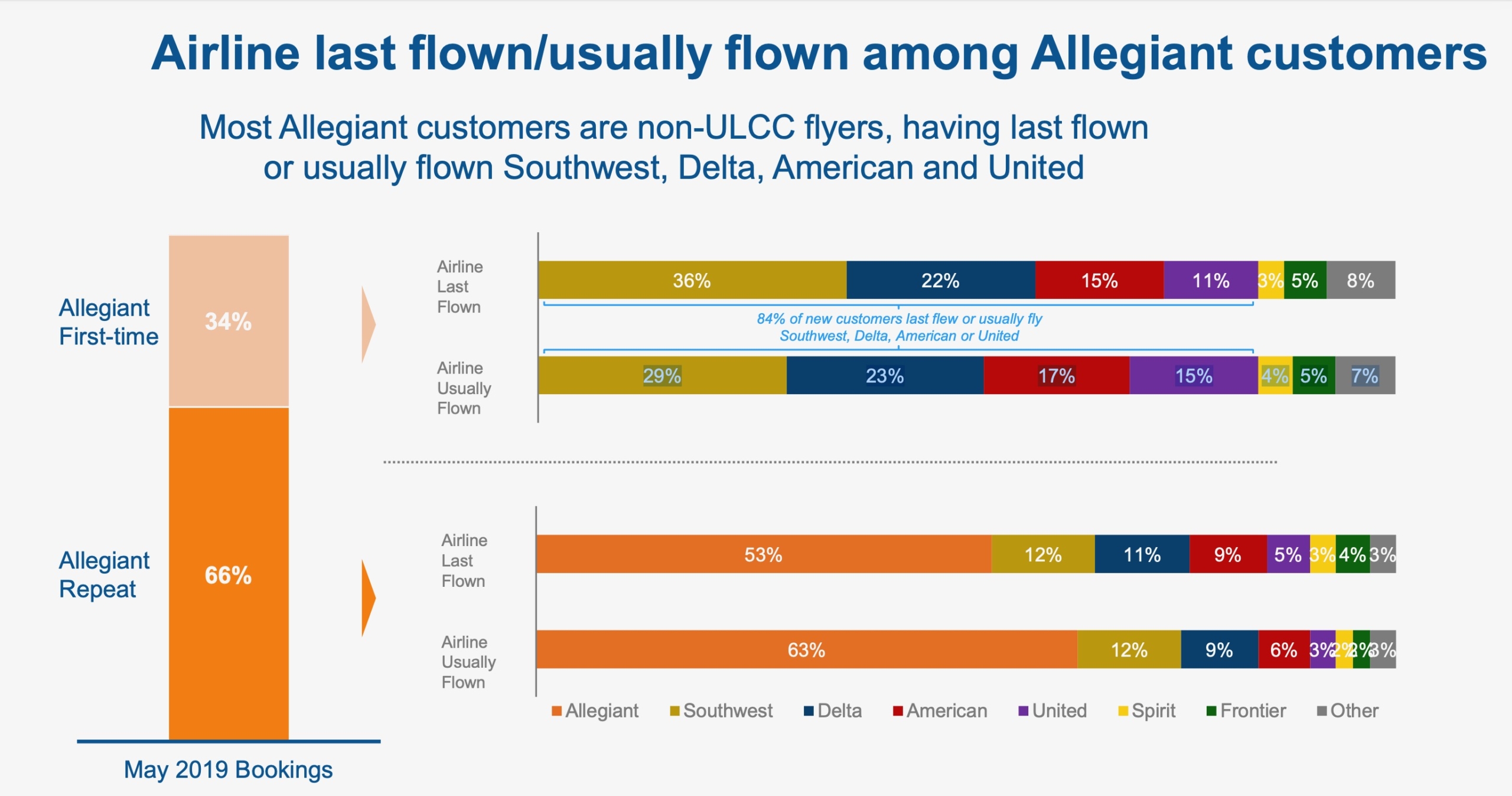
This week, Allegiant reported its Q1 earnings; empirical data strikes again. Management’s repeated claims during bargaining of financial “inabilities” fall on deaf ears, as the financial performance you delivered led the industry. During the call, management boasted of an industry-leading 18.1% EBITDA margin. That margin is 25% higher than Q1 2024, and the airline’s Operating Income margin is at least double that of jetBlue, Southwest, Frontier, United, or Delta. Remember, margins are scale-neutral and are used to compare the relative financial performance of carriers of different sizes. Allegiant is undeniably among the head of the pack. Despite the accrual of your retention bonus and a new Flight Attendant contract, Cost per Available Seat Mile (CASM) actually decreased compared to Q1 2024. On the operational front, our pilots continued to deliver a controllable completion rate of 99.2% on 32,000 departures for the quarter. This is despite management’s previous false claims that cancellations are largely driven by the Bloch Award. Consider these data points from the last earnings call: Revenue Growth: Airline operating revenue increased by 5.7% to $668M in the 1st Quarter, which is historically the worst financial quarter for U.S. airlines. Profit Margin Growth: Airline operating income increased by nearly 150% (not a typo) to $60.9M, delivering a 9.3 % operating margin, double that of United or Delta. Operating margin increased from 3.8% in 2024, an increase of 5.3 percentage points. Huge EBITDA Margins: Adjusted airline-only EBITDA margin was over 18%—well above any LCC/ULCC and nearly double most legacy carriers. Cost Decrease: CASMex minus special charges decreased by 9%, including the accrual of the pilot retention bonus and the new Flight Attendant Contract. Ancillary Gains: Even without increasing base fares, ancillary revenue increased by nearly 5% per passenger. Utilization Increase: Utilization has increased by 20% YoY. Scaled Reliability: 99.9% controllable completion rate with a 14% increase in capacity crushing the company’s claims that reliability and growth were impacted by the 0% unstacked, protecting, post-Bloch Award CBI solution. This is pure profitability, not poverty. The company is not in “survival” mode despite management’s claims to the contrary. Despite this excellent performance and strong demand for leisure travel, management continues to insist that a concessionary contract with worse-than-Spirit rules and below average with extreme and unprecedented levels of forced flying is critical for their “survival”. The answer is no. Our position is strengthened by data and the parties remain at an impasse. Who are our Customers and Competitors? Management insists that carriers like Spirit, Frontier, Avelo, and Sun Country are those that they “directly compete with.” Data strikes again (and not in their favor). Management has made it crystal clear to Wall Street that Allegiant is not a ULCC by classification or business model, and none of the aforementioned carriers are our “direct competitors”. Why they feel the need to lie to you is a mystery, but it is a fact that less than 5% of Allegiant’s customers come from Frontier (and only 3% of them from Spirit). Consider the following from management’s presentation to Wall Street:
Figure: Passenger Composition, Allegiant Investor Presentation 84 % of new Allegiant customers are customers of the “Big 4” — Southwest, Delta, American, or United. In fact, Allegiant has a 40 %+ Total Revenue per Available Seat Mile (TRASM) advantage over both Frontier and Spirit (even at nine pilots per aircraft). TRASM, by management’s own admission, is more aligned with brand carriers like jetBlue and Alaska than ULCCs. A fair, truly market-based contract for the pilots who deliver this industry-leading performance is revenue and margin-accretive, and non-negotiable at this juncture. Former Allegiant COO Speaks Out About JV
The Viva JV in its current form is simply about outsourcing U.S. pilot jobs and flying opportunities, and not about expanding “consumer access” to international markets. When management claimed this JV would be “revolutionary” for international travel, Bricker countered:
When management claimed that the JV is necessary to gain sufficient access to Mexican markets and compete with legacy carriers, Bricker noted that carriers with far fewer resources than Allegiant—including Breeze and Sun Country—already serve Mexico with U.S. based crews and no joint venture.
This is not Allegiant’s first attempt to outsource flying—your 757 flying to Honolulu was proposed to be outsourced to Ryanair until pilots drew a line. The time is upon us to draw the line again. Allegiant can launch Mexico service with Allegiant pilots presently, if they choose. This Union will continue to oppose any venture that does not protect U.S. jobs and guarantee Allegiant pilots their fair share of future growth and flying. You can read the full article here. Fort Lauderdale Transition MOU Fort Lauderdale (FLL) is among the bases next in line for a fleet transition from A320 to B737. In an email to the FLL pilots in reference to the transition, Captain Hardesty bravely claimed that the MOU “should not be controversial, as it is already part of the Section 12 AIP that the union and company have negotiated and agreed to”. Whether this is ignorance of the bargaining process or a blatant contempt remains uncertain. Any agreement achieved during collective bargaining over a new CBA is not available for implementation on an individual basis. As with any agreement, and especially an AIP, those terms are contingent upon the remaining outstanding terms in the contract. An AIP may become a full language TA, or it may not, but agreements on individual parts of the contract do not take effect until there is a complete, ratified contract. Management cannot cherry-pick agreements (or portions thereof) achieved during bargaining that they want to implement or “lock in” at their convenience via MOU. That’s not how it works; every pilot labor Union agrees. Management’s statement that it is not “controversial” to attempt to use an MOU to secure terms currently under dispute in bargaining is absurd. Manufacturing a controversy to erode pilot trust in the Union and force the Union to accept terms outside of bargaining is not good faith bargaining. Further, management inferred that the FLL pilots would be harmed by their requirement to adhere to the terms of the CBA. This is false. First, management has the means within the CBA to minimize or eliminate any hardship the affected pilots would face by opening the requisite number of vacancies (with appropriate excess) for B737 Captains and First Officers in FLL. This ensures that those pilots who wish to remain in FLL have every opportunity to do so. Management suggested that they would not/could not do so, yet since the Union held its ground and rejected the MOU, it appears that they have done exactly that. Second, those pilots who choose not to bid for the B737 in the vacancy will be afforded their displacement rights per the CBA, despite any management claim to the contrary. If the Company deviates from the CBA, the union will take all necessary action to defend the rights of the pilot group. Our contract must be followed. TAs or AIPs achieved during bargaining do not change that. Management should be aware that no agreements achieved during bargaining are available on an individual, piece-meal basis. If they want those terms, sign a new contract. Misleading Capacity “Reductions” Management will continue to sound the economic alarm to create fear and doubt in our pilot group. Regarding their statements about capacity reductions, it is worth noting that these reductions are still increases in year-over-year (YoY) figures. For example, August is still a 16% increase in ASMs and a 17% increase in block hours YoY. While management may wish to induce panic, the data shows that this is not a panic-inducing scenario in any sense. While it is reasonable to expect that Allegiant may slow some growth to match the economy, they will likely grow faster than most other U.S. airlines. Your expectations for a fair, market-based contract should remain unchanged. General Bargaining Updates The company has until Tuesday, May 13th, 2025, to submit their comments to the NMB in reference to our proffer of arbitration request. We will keep you informed of further developments as they occur. In Closing Since bargaining began, this management group has given you few reasons to trust them. They continue to erode the little remaining trust, if any, through their backhanded tactics (LAX MOU, training center rumors and leaks, etc.) on an almost hourly basis. Despite this, they will do everything possible to convince you that your Union is the problem. This management team can’t even offer the market‑based working conditions that peer carriers already provide their pilots. These provisions work with Allegiant’s “unique” business model as have been proven through testing and empirical data. Even still, they will tell tall tales to any pilot willing to listen. “Your Negotiating Committee is the problem,” they’ll say. “They just don’t want a contract,” they’ll claim. Give that some serious thought. Your Negotiating Committee isn’t on a special pay scale or receiving some direct retirement contribution/pension/stock option scheme you don’t get. We are a committee of your peers, and there is absolutely no motivation for us to delay a fair contract – we get better work rules and raises at the same time you do. Management is a different story. Delays save them money and wear you down. They want to stall a fair contract because it’s in their best interest. They will delay and string you along until you demand, in unison, that management deliver a fair, market-based contract to our pilots immediately, beginning with resolving the current impasse by accepting the Union’s data-based unstacking proposal. Your Negotiating Committee will continue to prepare each day to get this contract across the finish line through data analysis, strategy, and preparation, and provide you with as much information as is permissible so you can remain engaged and informed. It is time to stand together, unified, unapologetic about what you deserve, without fear of management or the vocal minority who believe you are worth concessions. Stand behind your brothers and sisters in the fight for what you deserve. We must show respect and dignity for our profession; we can’t wait for another carrier to carry the torch for us in hopes to pattern bargain from their efforts a decade from now. Every other pilot group has fought hard for what they have. The Allegiant pilots must do the same. The unique distinction of having both industry-leading financial performance and an industry-worst pilot contract ends now. Four years in negotiations will not result in concessions or backwards progress. An immediate, fair, market-based contract is the only option we will accept at this juncture in negotiations. In Unity, Captain Joshua Allen Captain Jay Killen Captain Brad Keller Captain J.R. Lynch Captain Jim Cole |
![]() |
|
Copyright (C) 2025 Allegiant Pilots Association, Teamsters Local Union 2118. All rights reserved. You are receiving this email as a member of APA Teamsters Local 2118. |
Negotiating Committee – April 30, 2025
/by Joshua Martin| Reorganizing for Strength! | |||||||||||||||||||||||||||||||||||||||||||||||||||||||||||||||||||||||||||||||||||||||||||||||||||||||||
![]() |
|||||||||||||||||||||||||||||||||||||||||||||||||||||||||||||||||||||||||||||||||||||||||||||||||||||||||
| Fellow Pilots:
The Status of Bargaining As we made clear in our previous updates, the parties remain at an impasse in negotiations. As a result, the Union has requested a status meeting with the National Mediation Board (NMB) and a proffer of arbitration. Consistent with its normal procedures, the NMB requested a response from management, which is due on May 13th, 2025.We will provide you with an update and additional information as it becomes available from the NMB. Based on the way the Railway Labor Act (RLA) works, the next CBA will likely be the one you work under for more than five years after it is ratified. A fair, enforceable contract is non-negotiable. Your continued insistence on a contract that does not sacrifice your working conditions to achieve market-based pay, or vice-versa, remains the key to achieving this goal. Flying Our Fair Share – IBT Opposition to Viva JV It should come as no surprise that the IBT has written in opposition to the Viva Joint Venture since our U.S.-based aircrews have no guarantee of any portion of the block hours of this agreement, and management has made it clear that they are seeking no changes to our current scope language. In Allegiant’s response to the IBT’s filing, they lament the fact that they have been waiting “58% longer” for approval than the last Joint Venture application. See their language below:
In perhaps management’s most ironic and tone-deaf public statement to date, they cry foul to the government and bewail about the length of time their unapproved application has been pending while negotiations for a fair pilot contract have raged on without substantive progress for over 4 years. Our peers have all managed to fly internationally with U.S. based pilots on their own metal. On the other hand, Allegiant management seems desperate to give international flying opportunities to foreign carriers – with no guarantee of a fair share of the flying and work rules that would allow them to slash 20% of the pilot force. No. This Union will continue to oppose any flying venture that disproportionately rewards foreign or other carriers. Scope matters and your Negotiating Committee will continue to fight for your rightful share of any flying sold under the Allegiant banner. Allegiant flights = Allegiant pilots. When the Company agrees to industry standard unstacking rules, we can turn our attention to resolving the Viva JV in a manner that protects our job security and career opportunities. The Truth About Unstacking Language Unstacking, in its simplest form, is forced work and ignoring pilot preferences. While management’s Ministry of Truth will be busy over the coming weeks building an educational series to “tell you how unstacking works,” their efforts would be better served elsewhere. Virtually the entire industry already agrees—and their rules follow the same format and are nearly identical. Avoid management “truths” and read the language for yourself:
As you can see, the language and format is virtually identical. Major airlines have aligned on the necessary protections surrounding forced work and PBS – except Allegiant. Management has decided to completely reinvent industry-standard language, common behavior from them during these negotiations, which management uses to stall progress intentionally. A standout in Allegiant’s proposed language is how management uses the numbers 50% and 70% deceptively to appear like they are using industry standard provisions, except that the provision functions in the exact opposite way. Unlike the rest of the industry which places hard limits on who cannot be unstacked (70% in normal months, 50% in holiday months), the Allegiant language says who can be unstacked. At least 70% of the pilots can have their preferences ignored every month, and in some cases beyond 80% thanks to a rounding clause does not present anywhere else in the industry. Every airline offers explicit and reasonable limits to protect seniority, Allegiant does not. Why? Their proposal on unstacking allows the company to manipulate inputs to achieve far greater levels of forced flying, potentially your entire schedule, all while claiming “operational necessity.” False. As we have said before, high unstacking is not a requirement of the “peak flying” model, nor the “day trip” model, nor does unstacking have any linear correlation to percent working (i.e. you don’t need 80% unstacking to achieve 80% working, despite management’s repeated claims). Beyond just the ‘unstacking’ percentage, we do not have any of the work rules surrounding unstacking to constrain it to any reasonable limits. Minimum staffing models, reserve restrictions, trip pairing and line construction provisions, trip mix protection by system and domicile, footprint rules, and reassignment protections are non-existent in their proposal. The very rules designed to protect your quality of life and keep forced work at bay are the very rules that management has continued to reject. To quote one manager, “if you don’t like your days off being Tuesday and Wednesday, then this airline isn’t for you.” To quote one company negotiator, “Your schedule will be predictable, your days off will be Tuesday and Wednesday.” Rubbish. We reject the idea of perpetual forced work and a limited (and shrinking) inventory of days off selections. We reject the idea that only the top 20% of pilots get their preferences awarded. We reject the idea that your only days off will be Tuesday and Wednesday for the rest of your career. The rest of the industry has moved on from 1980s-style work rules and chosen to preserve seniority rights and preferences, limit forced work, ensure schedule fairness, and protect quality of life. Unilateral authority to destroy your quality of life in perpetuity is not acceptable. Near Industry-Leading Productivity – Industry-Worst Work Rules Based on feedback from our last message, our pilots continue to appreciate discussions centered around unimpeachable data and empirical evidence. For years, management has tried to convince you that your efforts are inferior to those of your peers—and that you should be willing to accept less as a result. The tried-and-true lines of “we’re different,” “our airplanes sit more,” or “those guys just fly more” don’t hold any weight. Fortunately for us (and unfortunately for management), data doesn’t care about feelings and rumors — and neither does the U.S. Department of Transportation (DOT). Consider the following DOT data from 2023:
Figure: 2023 DOT BHPP/PPA Data Despite the so-called “low-utilization” model, Allegiant pilots flew virtually the same or greater block hours per pilot than the majority of the industry. You achieved that output with the leanest staffing cushion in the industry (9 pilots per aircraft) with the weakest work rules and low pay as a reward. In fact, only Southwest has a higher BHPP with statistical relevance, and proof positive that incentivizing productivity works better than trying to achieve it through brute force and destroying your seniority rights. As powerful as our BHPP is, other data points help to capture the actual effort our pilots exert to deliver industry-leading financial and operational performance. You should not be surprised to learn that Allegiant pilots are among the leaders in departures per pilot among major airlines, second only to Southwest. According to DOT data, in 2023, Allegiant pilots averaged 15% more departures per pilot than the third-place airline, and had 34% more than Alaska, 61% more than United, and 31% more departures per pilot than JetBlue. Consider the following compiled from data provided by the DOT Bureau of Transportation Statistics (visit the source here):
Example: Departure Per Pilot 2023 Four years of near-record high productivity with well below industry work rules have provided a basis for funding everything except for a fair pilot contract, including the financially disastrous Sunseeker resort, financed family fun centers, golf courses, software companies, go-kart tracks, and executive bonuses. While you operate more departures than your peers, often in less-than-ideal and challenging conditions, management believes it is obligatory that you capitulate now and accept worse-than-Spirit work rules (re-read “Mailer 2.0” if there is doubt). 4-leg days, non-towered airports, Larry Limos, outstation maintenance “adventures,” involuntary TDYs, base closures, and the like. The idea that you should capitulate to quality-of-life concessions in exchange for another decade of continuous abuse and degradation of your seniority rights is absurd. Management extracts above industry productivity from its pilots; the bill has come due. The data continues to show that the “low pilot utilization myth” is false. The idea that the Allegiant pilot “does less and flies less” is not reality—the data proves it. The Allegiant pilot has done more, with less, and for longer than any other major airline pilot. Management: we do not want your truth brochures, your flight crew appreciation socks, nor another shaving kit. The only “gift” that we want to see is a fair, enforceable contract. Gallagher’s “Legacy” Dog Whistle As Gallagher reminded us in the infamous “another f—ing airline” letter, the phrase “legacy work rules” is management’s favorite dog whistle. Management’s way of refuting fair, reasonable, market-based contract provisions is to falsely claim that such provisions would kill the company. The “legacy” moniker is an attempt to convince you that it is your Negotiating Committee that is being unreasonable by holding the line for a market-based contract without completely unnecessary concessions in scheduling, your seniority rights, and your quality of life. “They want legacy” is a scare tactic to convince you that basic quality-of-life protections are an irresponsible and unreasonable ask by your Union, while funding failing hotels, sponsoring family race-car teams, and other pet projects is perfectly affordable. The truth is that work rules don’t bankrupt airlines, but bad management certainly does. No matter how “cheap” a contract is, the same executives who mismanage our company will still demand concessions until pilots say enough is enough (reference: current negotiations). If trip rigs sink airlines, the rest of the industry hasn’t noticed. Industry-leading productivity deserves industry-standard protections. Legacy is simply management’s trigger word to convince you that you are worth less and should settle. No. In Closing The parties are at an impasse. We fully expect management to intensify their attempts to undermine the Union’s credibility and create division within our ranks. They do so to delay providing you with the contract you deserve. Managers will attempt to create controversies where none should exist (e.g., disparaging the Union for adding a committee member while their 13+ member negotiating team flies to bargaining sessions on private jets). You would be wise to ignore it. Division has no benefit for our pilot group. Now is not the time for weakness—it won’t get you a contract quicker. It is more critical than ever for every pilot to stand tall, reject concessions, and demand that management deliver the contract you deserve. Beyond that, you must remain engaged. It’s easy not to care when you don’t think that something affects you until your base closes, or you’re forced into unproductive overnight trips to Bellville, IL, or Stewart, NY, or you’re the one furloughed or unstacked. Even if you think you won’t be affected, you will be at some point. We must all demand that management deliver a fair and enforceable contract. Thank you for your support.
Captain Joshua Allen Captain Jay Killen Captain Brad Keller Captain J.R. Lynch Captain Jim Cole
|
|||||||||||||||||||||||||||||||||||||||||||||||||||||||||||||||||||||||||||||||||||||||||||||||||||||||||
![]() |
|||||||||||||||||||||||||||||||||||||||||||||||||||||||||||||||||||||||||||||||||||||||||||||||||||||||||
|
Copyright (C) 2025 Allegiant Pilots Association, Teamsters Local Union 2118. All rights reserved. You are receiving this email as a member of APA Teamsters Local 2118. |
Negotiating Committee – April 21, 2025
/by Joshua Martin| Reorganizing for Strength! | |||||||||||||||||||||||||||||||||||
![]() |
|||||||||||||||||||||||||||||||||||
| Fellow Pilots:
Happy Easter to All Who Celebrate We hope that our fellow pilots and your families had a great Easter weekend. We know this holiday comes at a frustrating time for many as our work for a fair contract and successful, cooperative future at Allegiant continues. Even still, we hope you were able to step back this past weekend and spend meaningful time with loved ones. Regardless of the noise, we should all remember to appreciate the quiet moments—they’re what we’re ultimately fighting to protect. We should all take time as often as we possibly can to remember what truly matters. Different Year, Same Story Management has a long history of attempting to undermine staffing and negotiations over scheduling. Using a data driven approach or empirical evidence has never been satisfactory to management when the numbers don’t support the Company’s demands, making it very difficult to reach an agreement on fair terms. If the Union provided any such evidence, Allegiant would try to discredit the results claiming that then current staffing is “not indicative” of the staffing levels of the future (read: they want less). Consider the following Union update from our second round of mediation over PBS in 2019:
After our last update, some pilots questioned whether Allegiant management had the willingness or operational capacity to significantly reduce headcount. While they may be coy about their intentions today, the Allegiant management of old was upfront about their intention to slash staffing to the minimum levels. They realized that through the natural efficiency of PBS and high levels of unstacking (ignoring your preferences), they could schedule pilots at their leisure and reduce headcount to levels significantly below any other major airline. Consider the following Union update from PBS mediation in 2018:
Even during our mediation in 2018, management wanted a 26% headcount reduction from already industry low staffing levels. For reference, even at our current, post-Bloch staffing level, we estimate Allegiant is over 20% less than comparable carriers. When you examine the numbers more closely on a block hour basis, Allegiant extracts 30+% greater block hour productivity per pilot in peak periods than the next nearest comparator on a relative basis based on publicly available data.
Example: Approximate Pilot Count Per Aircraft The Allegiant pilot always does more with less. In fact, it took almost 20 years for our pilots to secure even the most basic seniority protections, thanks in large part to Richard Bloch’s landmark arbitration decision. We have no intention of “forcing” the company to arbitrarily increase headcount. Our interest is in protecting what we have and what our pilots have fought for and rightfully earned through years of mediation, arbitration, and litigation. “Buying” Your Own Pay Raise After nearly four years of mediation, litigation, and arbitration, Arbitrator Richard Bloch delivered a landmark ruling in 2020 that finally ended years of scheduling contract violations and restored our seniority rights as guaranteed by the agreement that we negotiated. Unwilling to adhere to the clear, unambiguous language in our contract and the binding arbitration ruling, management resisted and filed suit in federal court to overturn the Bloch award. In 2022, their appeal was denied, and the threat of scheduling without regard for seniority or preferences was permanently put to bed – or so we thought. It has been made clear that the Allegiant pilots are expected to fund their own pay raises through concessionary scheduling “efficiencies”. These include a reversal of the Bloch award under CBI as well as the ability to ignore preferences for the majority of our pilots after PBS is implemented. The Allegiant pilots have made it clear that this is unacceptable. Retention Bonus Concerns Several pilots have expressed concern about the company’s intention or requirement to pay the retention bonus upon ratification of a contract or in the event of a strike. The Negotiating Committee will not use the retention bonus agreement as a negotiating device under any circumstance. As per the original agreement, pilots should expect that the entire retention bonus shall be paid within sixty (60) days of contract ratification. If we strike, do I lose my retention bonus? A legal strike has no effect on the retention bonus agreement. The Union will not entertain the elimination or reduction of the retention bonus agreement as a part of any return-to-work agreement negotiated with the company. The eligibility for bonus payment requirements are set forth in Paragraph 1.a. and 1.b of the Interim Agreement: a) you remain actively employed with the Company through the ratification date of the Parties’ amended CBA; or b) you retire from the Company’s employ due to reaching the FAA mandatory retirement age prior to the ratification date of the Parties’ amended CBA. A strike does not divest a pilot who satisfies the above criteria of their right to payment of their retention bonus. Management cannot suggest, infer, or explicitly state that they will refuse to honor the terms of your retention bonus payment in the event of a legal strike. If you have been a part of any such discussion with management, report it immediately to negotiations@apa2118.org. General Bargaining Updates Last week, we formally submitted a request for a proffer of arbitration and status meeting request from the National Mediation Board (NMB). In response, the NMB requested that Allegiant provide their comments no later than 29 April 2025. Allegiant requested a 2-week extension from the board so that they can “adequately respond to the Union’s assertions and provide the Board with the full context of the parties’ bargaining.” The request was granted and the deadline for management to provide their comments regarding our proffer was extended to May 13, 2025. The Negotiating Committee had a virtual meeting with the mediator on Friday, April 18th, 2025. The parties are scheduled to meet for a joint mediation next week on Thursday, April 24th, 2025. We will keep you updated regarding any further developments. Protect and Enforce – Understanding Contract Language The goal of your Negotiating Committee is simple, enforceable contract language. Our pilots frequently assume contract provisions are clear—until weak or ambiguous wording is used against them. If it’s not enforceable, it is exploitable. Consider the Company’s proposed unstacking language:
Example: Excerpt from company email to pilots on December 18th In December, the management publicly shared details of its above-quoted unstacking proposal in PBS. They characterized their proposal as having “50/70% unstacking limits” and strongly suggested that these limits were confined to “peak vs. non-peak” respectively. The truth is that this language had no requirement to prove necessity for 70%, no limit on frequency, and no mechanism for the union to review or challenge that justification. There isn’t a fixed limit or peak vs. non-peak provision. This language is wide open and easily exploited to the detriment of your seniority and quality of life. You may have already noticed the following: “Unable to Provide a Result” Clause = Full Management Discretion The statement “if the CBI/Solver is not able to provide a result” is ambiguous enough to be interpreted broadly and without limitation. “Solver Failure” immediately triggers higher unstacking, even if such a failure is the result of solver manipulation (as was past practice), artificial constraints, poor company planning, and/or unrealistic scheduling/staffing assumptions. Normalizing 70% and the “Single Trip” Clause If the “solver fails” on just one single day across a bid period, 70% unstacking is triggered. Even if there are just two “uncovered trip” on any given day, a virtual certainty if any open time is allowed to exist, then the company can ignore the preferences of 70% of line holders. For reference, 12 of our 22 bases had at least 2 uncovered trips on any given day in March 2025. Even the most minor staffing inefficiency or intentional over-scheduling triggers the limit to 70%. In short, there is no 50% limit, nor any “peak vs. non-peak” limitations in this language. It is at least 70% in virtually all cases. 70% – A Soft Limit Another unique “feature” of this language is the so-called “unstacking limit”. By definition, a limit is not to be exceeded. The language appears to clearly express a hard limit, then in the very next clause builds in a way to bypass it. The language states: “…up to, but not beyond, 70% of the regular line holders…” Then the “funny math”: “…70% unstacking limit will be calculated as follows…multiplied by 0.7…rounded up…” If you need extra math to calculate an already mathematically defined limit, it is simply a loophole disguised as a rule. Committee Changes We welcome Captain Brad Keller to the Negotiating Committee. Captain Keller is a Line Check Airman, serves as a Steward and SPC Representative for Local 2118, and is the current chairman of the G4 Pilot Assistance Fund, LLC. Captain Keller is a former United States Marine, and has been in the airline industry since 2007. Allegiant is his 5th Airline and this will be his 4th contract. We look forward to his line oriented insight and operational experience as we intensify our efforts to reach a fair agreement at the earliest possible opportunity. Although management has informed the Union that they intend to reject his addition to the committee, the Union intends to challenge this decision. In Closing We are especially grateful for the many messages of support and encouragement we received over the last several days. Your Negotiating Committee is a team of your peers and we remain committed to delivering a fair contract that we can all be proud of. We continue to work tirelessly toward that goal, and we appreciate your engagement, your questions, your trust, and your support. Thank you for continuing to hold management accountable for the contract they promised you. We look forward to delivering an agreement worthy of your vote in the very near future. PBS Decision Documents 240529_9th Circuit (PBS Decision)
Captain Joshua Allen Captain Jay Killen Captain Brad Keller Captain J.R. Lynch Captain Jim Cole
|
|||||||||||||||||||||||||||||||||||
![]() |
|||||||||||||||||||||||||||||||||||
|
Copyright (C) 2025 Allegiant Pilots Association, Teamsters Local Union 2118. All rights reserved. You are receiving this email as a member of APA Teamsters Local 2118. |
Negotiating Committee – April 25, 2025
/by Joshua Martin| Reorganizing for Strength! |
![]() |
| Fellow Pilots:
Bargaining Updates The parties participated in a virtual mediation session on Thursday, April 24, 2025. During this session, the Company finally made a counterproposal to our January 15th, 2025 Section 15 – Scheduling and PBS LOA proposal. Let it be clear: the parties remain at an impasse. The Union’s decision to request a proffer of arbitration remains unchanged. In fact, the Company’s proposal only strengthens our resolve to seek a release from mediation. A proffer for arbitration is a required precursor to a 30-day cooling off period and any legal right to engage in self-help. Management’s proposals made it clear that they have no intention of reaching a voluntary agreement for a fair contract with its pilots. They expect you and your Union to capitulate to their concessionary demands when it comes to your seniority, schedule and quality of life. That will not happen. First and foremost, management’s re-packaged 70 percent unstacking proposal doesn’t move the needle. The company continues to reject the Union’s reasonable, data-driven, and industry-supported 30/50 percent unstacking proposal. That is why we remain at impasse. The unworkable, interim or bridge PBS they are now proposing is a classic “look over here, not there” proposal designed to distract attention from an attack on the seniority rights of 70 percent or more of the pilot group. After years of avoiding any material commitment to progress, management suddenly has a surface-level interest in “collaborating” on a faster path to a commercial PBS. The Union’s unstacking proposal is fair, properly tested, based on empirical evidence, and accommodate the “unique” aspects of the Company’s operation without completely destroying the privileges and rights of your earned seniority. We have grieved, arbitrated, mediated, and litigated this very issue for the last 10 years. It ends now. The Company now says it disagrees with the Union’s testing. In reality, they are angry that we proved our proposals actually work for pilots and the operation. Management created PBS testing parameters that were absurd and statistically improbable, anticipating that the Union’s inability to solve them would support their position. Despite operating with 20–40% fewer pilots per aircraft than peer carriers, Allegiant set an artificially extreme bar for the Union’s “successful” PBS tests. Some components of their statistically improbable (and designed to be unsolvable) worst case setup are:
The result is then compared to CBI baseline metrics—despite being based on worst-case, not standard, assumptions. The test was clearly rigged for failure so they could justify their positions. Despite this, the Union successfully solved these absurd problems per management’s request, including in bases the company claimed were “problem bases” or “chronically understaffed,” management would then reject the testing results claiming the very same bases were now “overstaffed,” or “not a problem,” or some other reason to invalidate the results. When asked to provide their results for the same problems, they could not. Curiously, management has now changed their story to claim that their “testing” (which the Union has never seen) produces different results. The surface bargaining and shifting narratives continues with their new “implementation timeline.” Suddenly, management’s original timeline of “up to 36 months” for implementation has been whittled down to just “within months of ratification.” But don’t forget – this is all predicated on the membership capitulating to the company’s 70 percent unstacking rule. Management appears happy to accelerate progress to an industry-standard commercial PBS system, so long as the pilots are willing to give up the Bloch award, accept concessions in PBS, and trade away their seniority protections just to get there. No! From management’s update:
Management continues to insist that they alone have a monopoly on “the truth.” Their managers, with a documented history of spreading misinformation and outright lies, will now use their less-than-elementary understanding of NAVBLUE and commercial PBS systems to explain to you how unstacking works—because clearly your Negotiating Committee and/or a cursory Google search is insufficient. The industry agrees how it works. The vendor agrees how it works. The only people that don’t agree are Allegiant managers. Perhaps they will enlighten us and the entire industry with their “truth” presentation. But while they are wasting their time, ours, and yours on presentations, keep in mind they refuse to agree to industry standard unstacking rules to protect your seniority, and no “presentation” will change that fact. If our previous unstacking updates were “inaccurate and misleading,” in just a few sentences management could have:
And when it comes to their overall lack of credibility, they could have:
As is standard at Allegiant, management is silent and unresponsive when faced with empirical data and facts. Unsurprisingly, management now needs extra time over “the coming weeks” to engineer the “truth” they need to show you—because only management knows the truth. Don’t waste your time reading it. Follow this link to learn “the truth” directly from the software vendor. Pay particular attention to the Processing Logic section for a deeper dive on how PBS really works. From management’s update:
The emails and texts we received suggest that our pilots have already seen right through this. Surface bargaining disguised as “collaboration” and progress, while somehow putting the operational liability for staffing on its pilots. First, in the company’s proposals the Union would have absolutely no control over any of the key variables that affect unstacking – no control on staffing, scheduled trips, trip mix, open time, etc. The company would have complete discretion to change the variables at will—such as reducing headcount or manipulating trip construction—which would make solving unstacking impossible. Even still, management suggests that they would accept a solution below 50% unstacking—if only the Union could make it work. That’s the equivalent of management giving you a car with four flat tires, no spare, no roadside assistance, and no phone—and then saying, “If you can still make it to work on time, we agree not to discipline you.” It’s a recipe for decades more of the same: endless grievances, arbitration and lawsuits while the Company mows down our seniority rights and quality of life. From management’s update:
After our proffer request, management has suddenly found “respect for the mediation process.” The company’s history of leaking confidential bargaining information, sending out cut-rate mailers to your spouse, spreading misinformation, disparaging the Union in recurrent ground school, spreading false rumors about the Negotiating Committee, and a host of other activities is well documented and will be shared with the NMB when the opportunity is presented. The parties remain at an impasse. Management’s April 24, 2025 proposal has done nothing but reinforce that reality. Any messaging from the Company suggesting that progress was made, that they have moved in our direction, or have “given the Union everything they are asking for” is false. They have not. We remain committed to reaching a fair agreement that reflects the realities of our operation and the value you bring to this airline every day. The Sky [Isn’t] Falling Management continues to paint a dire economic picture to lower your bargaining expectations. Unsurprisingly, the data tells a different story. Allegiant saw a 14.4% growth in passengers in March alone, with an increase in revenue passenger miles (RPMs) of almost 16% as compared to the same period last year. Available seat miles (ASMs) grew much more aggressively, up more than 20%. Management seems to conveniently “forget” its statements, on public record, about its own operation. Consider the following quote from Allegiant’s CEO Greg Anderson:
Management cannot have it both ways: proclaim growth and resiliency to Wall Street while complaining to pilots that they are “too poor” and need scheduling concessions to pay below market wages. Allegiant is not in “survival” mode. Our pilots deserve and will obtain a contract that reflects the reality of your contributions to this carrier. Your expectations should continue to reflect that. Passenger Productivity What really drives value? Passengers. “Allegiant” isn’t paid by the Block Hour – they’re paid for safely moving people. The question isn’t whether the aircraft flies on Tuesdays—it’s how much work our pilots do for every customer moved. Based on the most current DOT information, Allegiant pilots safely transport the highest number of passengers per pilot of any airline in the industry – over 14,400 per pilot in 2023. Each pilot is responsible for 50.1% more passengers per year than jetBlue, 16.9% more than Spirit, 13.1% more than Southwest, 66% more than United, 115% more than Sun Country, and 51% more than Delta. Aircraft may be sitting, but the pilots are not. You fly the most passengers per pilot – with less support, less schedule choice, less protections, and less pay than your peers. You are not underutilized, you’re underpaid – with the worst work rules across the industry. Enough is enough. Financial Productivity Empirical data can tell us more about our pilots’ contributions to the financial success of this airline. Between 2017-2023, Allegiant ranks #1 in average operating income per pilot – ahead of every ULCC, Delta, and United, and #2 in net income per pilot, second only to Southwest. You drive industry-leading financial performance for this carrier – money which was promptly spent on failing resorts, golf courses, family fun centers, and the like. Allegiant pilots are high value, not low cost, yet management continues to refuse to invest in its own pilots. Consider management’s own words if there remain any doubt:
Whether the aircraft “sits on Tuesdays” or not is completely irrelevant to your work and contributions to this airline. Allegiant pilots produce significantly more for their airline than any of their peers – all within the confines of a bare bones operation with limited support when things go wrong. The Allegiant pilots schedule and quality of life are objectively worse compared to our peers thanks to no trip rigs, virtually no schedule construction rules, thinner staffing, less reserves as compared to our peers, and limited opportunities for schedule adjustment. Ask our central Florida based pilots how much this so-called low utilization model improves their schedule quality—or how much it reduces the time they spend crisscrossing the state in Larry’s Limo to rescue a purposely understaffed operation. Ask any seasoned Allegiant Captain to describe their misadventures with outstation maintenance. The real Allegiant “difference” is that Allegiant pilots do more with less. Management’s mistake is believing that our pilots should expect less—we do not. In Closing The Union remains resolute in its decision; no further progress will be made nor will any fair agreement result from mediation without the economic pressure of a 30-day cooling off period and threat of strike. Allegiant’s games have run their course. We will not settle for a substandard agreement at this juncture.
Captain Joshua Allen Captain Jay Killen Captain Brad Keller Captain J.R. Lynch Captain Jim Cole
|
![]() |
|
Copyright (C) 2025 Allegiant Pilots Association, Teamsters Local Union 2118. All rights reserved. You are receiving this email as a member of APA Teamsters Local 2118. |
Negotiating Committee – April 14, 2025
/by Joshua Martin| Reorganizing for Strength! |
![]() |
| Fellow Pilots:
Forced Work + No Preferences = Less Pilots This is a simple, data-driven exercise that you can imagine for yourself. If you own a business and can force your employees to work at-will, on the days of your choosing, you need significantly less people in your workforce. In the case of an airline, if your only “structural” limits are FAR Part 117 rules and a few limited scheduling provisions, both the number of pilots in the workforce and the resultant quality of life for those pilots who remain reduce dramatically. Our pilots are a resource to invest in, not simply a property-like cost that must be controlled as management prefers. Management has not been coy about their desire to minimize headcount and increase productivity through force. The only cost is your quality of life, your real earnings, and fewer pilots on property – sacrifices management is obviously willing to make. Management repeats the “unique business model” and “operational necessity” excuse, hoping for emotionally driven concessions. Fortunately, data is not swayed by emotion. High unstacking/forced work is not a “necessity for our unique operation” and the data proves it. Removing your seniority from the equation and forcing work is a wholly unacceptable concessionary proposal that predates these negotiations. The idea that giving management a concessionary contract is necessary for the company’s survival is nonsense. In conjunction with a strong business model, a fair contract increases productivity and profits. Airlines like Southwest and Alaska achieved record earnings under new pilot contracts, while still respecting seniority and providing for a decent quality of life. Allegiant would be wise to do the same. Continued Clarification Regarding Current CBI There continues to be some misinformation regarding schedule, specifically that the company’s offer is superior to CBI with respect to honoring seniority and preferences. It is worth repeating that CBI is a 0% unstacked solution as guaranteed by the Bloch award. The company’s proposal on PBS represents a major concession from the current contract. Some think, “My schedule is great, I don’t see the problem”. Your schedule is satisfactory because the Bloch award guarantees that your seniority is honored in CBI. The status quo will change and will be worse under the company’s proposal. In the company’s proposed scheduling environment, broad, new unstacking rights would give the company the ability to ignore seniority and build schedules entirely at management’s discretion. Management has previously made it clear that any improvement to pilot pay must be tied to concessions in scheduling. In their proposal, you are buying your pay rates through giving up seniority, your quality of life, and sacrificing our junior pilots. As any labor union would, we find this proposal wholly unacceptable. Disciplined Bargaining The RLA bargaining process is time consuming, difficult, and frustrating. Many pilots question why we remain in mediation when the company and Union have not been able to reach an agreement on fundamental working conditions while management engages in bad faith behavior, shows a lack of cooperation, and disregard for the bargaining process. First, the National Mediation Board alone determines if and when the parties are released from the mandatory mediation process. Second, as discussed below, we wanted to use all of the means at our disposal to try to reach an agreement before we requested a release to self-help, which is a costly, last resort option available to both parties if released from mediation by the NMB. Because of its potential economic impact, self-help is never the desired outcome, but sometimes the only viable way to reach a fair and enforceable agreement. There is no operational need for the company’s concessionary and extreme bargaining demands. Moreover, through deliberate stalling, misinformation campaigns, and bad faith tactics, management has attempted to use mandatory mediation time to wear down and divide the Union. They know that the RLA process requires the parties to spend a substantial amount of time in negotiations before being released by the NMB, and they attempt to use that delay to their advantage—engaging in “surface bargaining” to make minimum progress while creating division in our ranks in an attempt to entice pilots to accept concessions and settle for less. Instead of frequently complaining, we used a disciplined, data-driven approach to provide solutions to each and every company problem they presented, no matter how “unsolvable” or trivial, in an attempt to reach agreements; we could not. We kept detailed records of the company’s behavior, including shifting positions, their near “unsolvable” parameters and frequent obstructionism. We believe a 30-day cooling off period, followed by self-help, if no tentative agreement is reached, is necessary to produce a contract. We have a well-documented, evidence-based case to present to the National Mediation Board (NMB) should a status meeting be granted. Our reports include a detailed record of why we have reached an impasse, the company’s conduct at and away from the bargaining table, the Union’s good-faith efforts, and our conclusion that a release to self-help is justified and necessary to reach a fair agreement. Based on our filing to the NMB requesting release from mediation, some of our pilots have additional questions regarding the NMB bargaining process, the status of mediation, and the possibility of self-help. Over the next several updates, we will attempt to answer all of your outstanding questions. Additionally, expect more communication and to receive a Strike Preparation Handbook from the SPC. 1. Is there a timeline or time limit for the NMB to respond to the Union’s request “for a proffer of arbitration”? No. The NMB has full discretion and there is no mandatory timeline to respond to a request for a proffer of arbitration, the formal name for a request to be released from mediation. There is no statutory deadline and the NMB will base their decision on multiple factors. A status meeting between the parties and the NMB may occur before a decision on our proffer request will be made. During the status meeting, the Union will present its evidence-based case for how the company’s proposals and conduct have created the current impasse. If a status conference occurs, management will also be given the opportunity to present its case. 2. How long does the process generally take if the mediator grants our request? When can self help begin? To clarify, while mediators provide their opinion to the NMB, mediators do not grant or deny a request for a proffer of arbitration. A proffer request and related decisions are made by the three member, presidentially appointed NMB members. If the NMB makes the proffer of arbitration and either party rejects arbitration (which the Union will), then the 30-day cooling-off period before self-help can legally begin starts immediately. The parties can lawfully engage in self-help immediately after the cooling off period expires. 3. What is self-help and what can the Union do during that time? It is commonly misunderstood that self-help simply means a strike alone. In reality, self-help applies to both parties equally under the law. During self-help, the Union may legally strike the employer, either in full or in an intermittent, unpredictable fashion. At the same time, the employer can lock out employees and unilaterally change wages, rules, and/or working conditions (e.g., implement the “mailer”) in an attempt to encourage pilots to cross the picket line to work (“scabbing”). An employer can also attempt to hire replacement workers, although the training for flight crews makes this costly and impractical. 4. If the NMB grants our request, what should we expect and how long will it take? There is no timeline for the NMB to make a decision on a request for a proffer of arbitration/release. If the NMB decides to make a proffer, the parties will be notified that the NMB has terminated its services and is making a proffer of binding arbitration. The parties will either accept or reject arbitration. If either or both parties refuse arbitration, the NMB immediately releases the parties into a 30-day cooling off period. During the 30-day period, it is common for the parties to engage in “super mediation.” This is a compressed period of multiple, intense bargaining sessions with the intent of reaching an agreement to avoid a strike. If this does not lead to an agreement, the parties will be released to self-help at the end of the cooling off period. 5. If the NMB does not grant the request, what happens? If the NMB believes that further mediation without economic pressure could be productive and lead to an agreement, the request may be denied. The parties will remain in mandatory mediation. The Union believes that it has gone well beyond every reasonable effort to make an agreement. We do not believe further “no stakes” mediation will lead to an agreement. Your Duty as a Pilot Consider the source; they’re not “just like us” – Regardless of their flying background, managers are just that, managers. They aren’t “just like us” and they aren’t “here to help.” These former line pilots are not like you and do not bargain for your best interest. Most have vested stock options, the freedom to control their own schedules, and they won’t live under the contract they are negotiating “for you.” Should they ever return to the line, they’ll have the privilege of avoiding the worst of whatever is negotiated through their seniority. Report Illegal Behavior – By law, management cannot interfere with union affairs in any manner, especially one which affects their ability to bargain or represent its members. Inappropriate and reportable behavior includes, but is not limited to:
Report any suspected violations to negotiations@apa2118.org. As we prepare for a potential status meeting with the NMB, additional reports will be particularly useful over the coming days and weeks.
In Unity, Captain Joshua Allen Captain Jay Killen Captain J.R. Lynch Captain Jim Cole
|
![]() |
|
Copyright (C) 2025 Allegiant Pilots Association, Teamsters Local Union 2118. All rights reserved. You are receiving this email as a member of APA Teamsters Local 2118. |